 The Ministry of Ungentlemanly Warfare Parents Guide: At a Glance
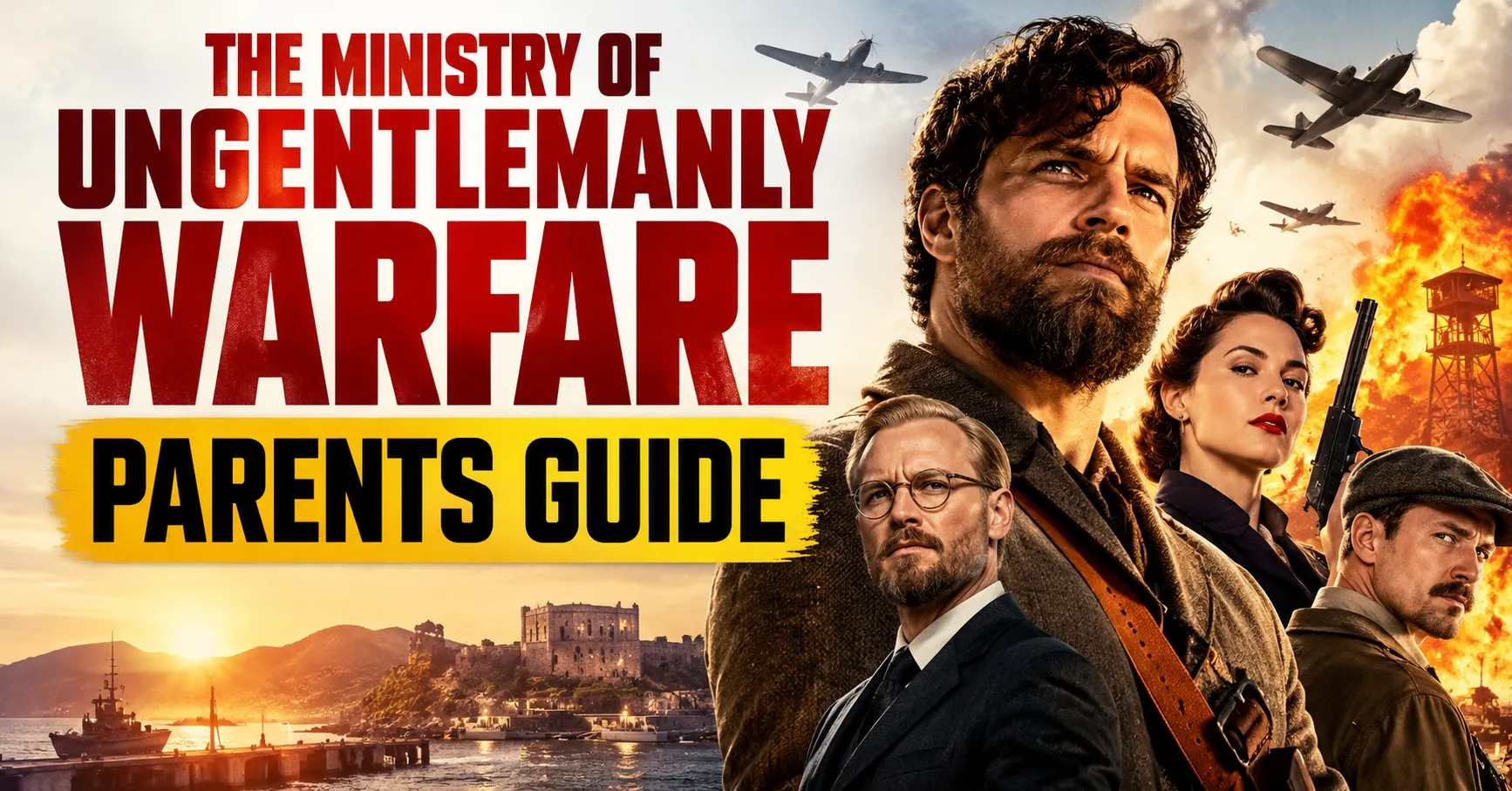
The Ministry of Ungentlemanly Warfare (2024) is officially rated R by the MPAA for strong violence throughout and some language. Directed by Guy Ritchie and starring Henry Cavill, this high-octane wartime action film features relentless combat sequences, stylized battlefield executions, and frequent weapon usage, making it entirely unsuitable for younger children while remaining accessible to mature teenagers.
Quick Safety Scorecard
Parents can quickly evaluate the film’s content intensity using this structured advisory scorecard, which breaks down the core content categories evaluated by major family entertainment review boards.
Violence and Gore: Severe. Features continuous combat, automatic weapons fire, knife stabbings, bow-and-arrow combat, and stylized wartime deaths with frequent blood spurts.
Profanity: Moderate. Includes a limited number of uses of the “f-word” alongside period-appropriate strong and mild profanities.
Sex and Nudity: Mild. Contains flirtatious banter, form-fitting vintage attire, and a very brief, distant glimpse of a man’s naked bottom with no explicit sexual content.
Substance Use: Mild. Characters frequently smoke cigarettes, cigars, and consume alcohol socially in wartime settings and command environments.
Official Movie Information
Reviewing the baseline production details helps contextualize the film’s creative tone, historical inspiration, and structural classification before scheduling a family viewing session.
Official MPAA Rating: Rated R for strong violence throughout and some language
Total Runtime: 2 hours 2 minutes (122 minutes)
Director: Guy Ritchie
Primary Cast: Henry Cavill, Alan Ritchson, Eiza González, and Alex Pettyfer
Genre Classification: Action, War, Historical Drama, Comedy
Movie Versus Book: Clearing Up Common Confusion
Many viewers searching for a parents guide often experience confusion between Damien Lewis’s historical non-fiction book and Guy Ritchie’s cinematic adaptation. While both works explore the same clandestine World War II missions, the book offers a detailed factual chronicle, whereas the film transforms historical operations into a stylized Hollywood action blockbuster.
Is the Movie Based on a True Story?
The film is directly rooted in real-world history, drawing inspiration from Britain’s secret World War II initiatives authorized by Winston Churchill. The Special Operations Executive (SOE) carried out genuine unconventional warfare missions that challenged standard military protocols.
Real Historical Rooting: The characters, settings, and core objectives reflect actual operatives who executed high-risk sabotage operations behind enemy lines.
Cinematic Exaggeration: Guy Ritchie’s film significantly amplifies the tone, combat style, and character bravado for entertainment value, diverging from strict historical documentation.
Tactical Realism vs. Hollywood Flair: While the missions happened, the execution on screen relies heavily on comic-book-style action rather than gritty, realistic documentary footage.
The Book Versus the Cinematic Adaptation: What Parents Need to Know
Parents evaluating suitability must distinguish between the literary source material and the visual film adaptation, as their content profiles differ significantly.
Source Material Origin: The film is adapted from Damien Lewis’s historical non-fiction work titled Churchill’s Secret Warriors, which documents real wartime espionage and sabotage.
Content Differences: The book functions as a factual historical account suitable for older history students, whereas the R-rated film introduces graphic visual combat, explosive violence, and stylized battlefield gore.
Alternative Suitability: Mature teenagers interested in World War II history can often read the book safely without encountering the intense R-rated cinematic elements found in the movie adaptation.
Detailed Content Breakdown by Category
Evaluating the specific content categories helps parents align the R-rating criteria with their household viewing standards. Breaking down the film’s violence, language, sexual content, and substance use reveals precise scene contexts without unnecessary moralizing.
Violence and Gore: Stylized Combat vs. Realistic Grime
The primary reason for the R-rating is relentless wartime combat orchestrated under Winston Churchill’s directives. Rather than grim, realistic bloodshed, the action employs a fast-paced, comic-book-style presentation that balances heavy tactical warfare with stylized, cinematic flair.
Automatic weapons fire, rifles, and explosives drive constant battle scenes featuring blood squibs and dramatic tactical defeats.
Close-quarters altercations include stealth knife actions, silent takedowns, and hand-to-hand combat behind enemy lines.
Interrogation sequences feature brief, non-graphic tension elements such as threats of electrical coercion or being suspended by the wrists.
Profanity and Strong Language
Language remains moderate compared to typical R-rated action blockbusters. The dialogue prioritizes tactical military banter and period-appropriate dialogue over excessive vulgarity, keeping the spoken elements relatively clean for older teens.
The “f-word” appears in a limited, controlled number of instances during high-tension combat or narrow escapes.
Historical British slang and mild conversational insults fit naturally within the 1940s military espionage environment.
Sexual Content, Nudity, and Romantic Subplots
Sexual content is minimal, focusing entirely on espionage charm and flirtatious banter rather than physical intimacy. There are no explicit sex scenes, making this category the least concerning aspect of the film’s maturity rating.
Undercover operatives use lighthearted flirtation as a tactical tool to gather intelligence and distract adversaries.
Costumes feature form-fitting vintage evening gowns and tailored suits suited for upscale wartime social venues.
A single, very brief distant visual of a man’s naked bottom occurs during a fast-paced comedic diversion.
Alcohol, Smoking, and Substance Use
Substance use strictly mirrors mid-20th-century historical realities of wartime service. Characters regularly consume tobacco and alcohol during tactical briefings, command planning sessions, and undercover social settings.
Cigarette and cigar smoking are frequent visual elements during military strategy meetings and downtime.
Social drinking of whiskey and wine takes place in wartime pubs, officers’ clubs, and covert operational bases.
Alcohol functions occasionally as social camouflage or a behavioral lubricant during undercover infiltration sequences.
Granular Age-Tier Suitability Breakdown
Children between the ages of 10 and 13 should generally avoid watching The Ministry of Ungentlemanly Warfare due to the high frequency of graphic violence and weapon combat. Even though the action features a stylized, comic-book-style flair rather than grim realism, the relentless body count and weapon executions exceed appropriate boundaries for early adolescents.
Ages 10–13: Strict Warning and Why It’s Inappropriate
Pre-teens navigating middle school years lack the contextual media literacy required to process continuous tactical warfare without being negatively impacted by aggressive visual stimuli.
Constant Combat Intensity: The film features continuous gunfights, knife stabbings, and explosive destruction that create an overwhelming environment for viewers under 14.
Desensitization Risks: Younger pre-teens may struggle to process stylized violence without interpreting it as realistic or imitating combat behavior.
Parental Discretion: Parents seeking family movie night content should bypass this title for pre-teens in favor of lighter historical adventures.
Ages 14–16: Conditional Viewing for Mature Teens
Mature teenagers aged 14 to 16 can often handle the film safely if parents exercise conditional approval based on individual maturity and media habits. Because the violence utilizes comic-book-style action rather than disturbing gore, older teens accustomed to mainstream superhero or war blockbusters will find the content manageable.
Maturity Assessment: Parents should evaluate whether the teenager easily distinguishes between cinematic fiction and realistic historical violence before granting permission.
Contextual Discussion: Watching alongside a teenager allows parents to address historical context regarding Winston Churchill’s real Special Operations Executive.
Language and Substance Factors: The moderate profanity and mild substance use present minimal concern for this specific age bracket.
Ages 17+ and Adults: Recommended Audience
Adults and older teenagers aged 17 and above represent the ideal target audience for Guy Ritchie’s action-heavy historical film. Viewers in this bracket will fully appreciate the stylistic pacing, dark humor, and fast-moving espionage narrative without requiring parental guidance or content filtering.
Unrestricted Viewing: The R-rating aligns directly with standard adult expectations for wartime action movies featuring intense tactical combat.
Entertainment Value: Mature audiences seeking fast-paced entertainment, ensemble casts, and historical fiction elements will find the runtime engaging.
Official Trailer & Visual Overview
Reviewing the official promotional trailer offers an immediate glimpse into the high-energy pacing, stylized espionage action, and ensemble cast chemistry before committing to a full feature viewing. The preview captures the exact aesthetic tone established across digital distribution channels like Prime Video.
Watch the Official Trailer
Prospective viewers can examine the official promotional video below to evaluate the movie’s visual styling, character dynamics, and action intensity prior to viewing.
The preview highlights prominent performances by lead actors including Henry Cavill, Alan Ritchson, and Eiza González.
Core promotional clips establish the distinctive blend of covert espionage operations and high-octane combat.
What the Visual Tone Feels Like
The film’s overall visual presentation relies on saturated color grading, fast editing rhythms, and retro 1940s styling that deliberately separates it from grim historical war dramas. Director Guy Ritchie infuses signature stylistic flair into every sequence, emphasizing style and bravado.
Cinematic Style: Dynamic camera movements, tailored vintage wardrobe designs, and charismatic character introductions drive the visual presentation.
Action Sequences: Choreographed combat choreography and explosive set pieces deliver an energetic feel akin to modern graphic novel adaptations.
Pacing and Atmosphere: A brisk narrative rhythm maintains high tension while balancing dangerous wartime missions with lighthearted banter.
Actionable Alternative Movie Matrix
When parents determine an R-rated movie like The Ministry of Ungentlemanly Warfare is too intense for family viewing, selecting lighter historical or adventure films bridges the entertainment gap. Choosing family-friendly action movies or classic World War II features allows younger audiences to enjoy engaging historical storytelling without graphic R-rated bloodshed.
Lighter WWII and Action Alternatives for Younger Viewers
Families seeking alternative viewing options can explore historical films and action adventures that offer thrilling plots with significantly reduced violence and cleaner content profiles.
The Great Escape (1963): Offers a classic World War II prisoner-of-war adventure with high tension and minimal graphic gore, making it suitable for older kids and teens.
National Treasure (2004): Delivers fast-paced historical puzzle-solving, treasure hunting, and adventure appropriate for general family audiences.
Captain America: The First Avenger (2011): Features comic-book-style wartime heroism and combat against fictionalized adversaries without explicit R-rated bloodshed or vulgarity.
Where to Check Detailed Community Ratings
Consulting crowd-sourced database platforms gives parents valuable peer insights before finalizing any family movie night selection. Reviewing community-voted feedback across specialized streaming platforms and parent resource portals ensures complete transparency regarding specific scene triggers and content warnings.
Parent Resource Portals: Explore detailed user-submitted advisory notes via the IMDb Parental Guide for explicit breakdown categories.
Multi-Family Perspectives: Cross-reference community reviews on family entertainment websites to evaluate broader peer consensus on age appropriateness before pressing play.

