 What Is the ARD Process? A Parent’s Clear Introduction to Special Education
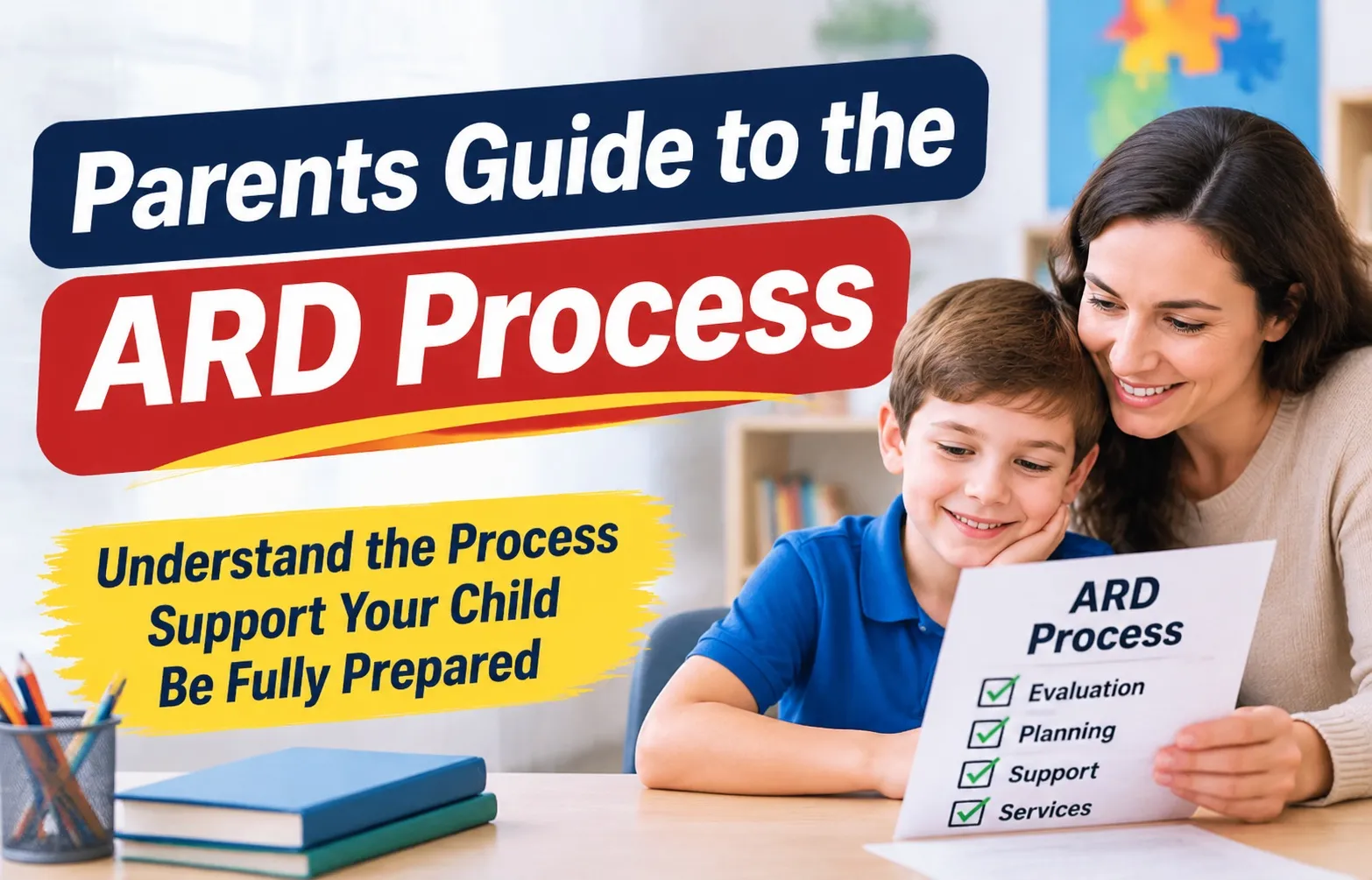
The Admission, Review, and Dismissal (ARD) process is the formal system school districts—most notably in Texas—use to determine whether a child qualifies for special education services and to build their individualized educational plan. Designed to protect student rights under federal law, this collaborative process brings parents and school professionals together as equal decision-makers.
What Does ARD Stand For and How Does It Work?
ARD stands for Admission, Review, and Dismissal, which represents the three core stages of a student’s special education journey. Rather than a single test or one-time conversation, the ARD process is an ongoing cycle of evaluation, planning, and progress checks governed by the Individuals with Disabilities Education Act (IDEA).
Every public school is legally required under IDEA to provide eligible students with a Free Appropriate Public Education (FAPE) tailored to their unique learning needs. The ARD framework ensures schools fulfill this obligation transparently while keeping parents informed and involved at every step.
- Admission: Reviewing formal evaluation results to decide if a student has a qualifying disability and needs specialized instruction to enter special education.
- Review: Meeting at least once a year—or whenever a parent or teacher requests—to evaluate academic progress, update annual goals, and adjust classroom supports.
- Dismissal: Determining when a student has met their goals, no longer requires specialized instruction, or transitions out of special education services through graduation or updated evaluations.
How ARD Connects to Your Child’s IEP and Special Education Rights
Many parents feel confused about the difference between an ARD and an IEP, yet the two work hand in hand. The ARD committee is the team of educators, specialists, and parents who meet to discuss data and make decisions, while the Individualized Education Program (IEP) is the legally binding written document that team produces.
In states outside Texas, this same gathering is commonly called an IEP meeting, but the legal protections remain identical under federal IDEA rules. Within the ARD committee, you are not a passive guest—you hold equal standing alongside teachers and administrators to approve services, request changes, or ask for additional data before any plan takes effect.
- Your Voice Counts Equally: No initial special education evaluation or first-time placement can begin without your informed written consent.
- Data-Driven Decisions: Every goal, accommodation, and therapy service written into the IEP must be backed by classroom observations, formal assessments, and your input as a parent.
- Written Protections: Schools must provide advance written notice before meetings and share a copy of your Notice of Procedural Safeguards so you always know your legal options.
Who This Guide Helps (Initial Evaluations vs. Ongoing ARD Meetings)
Whether you are just starting to notice learning challenges at home or preparing for your child’s yearly program review, this parents guide to the ARD process walks you through what to expect at every stage. Understanding the rules ahead of time removes guesswork and helps you walk into school meetings feeling prepared rather than overwhelmed.
- First-Time Parents Requesting Testing: Families suspecting dyslexia, speech delays, autism, ADHD-related learning impacts, or developmental struggles who need to request an initial evaluation.
- Parents Preparing for an Initial ARD: Caregivers who have completed school testing and want to understand eligibility criteria and how the first IEP is built.
- Families Attending Annual or Revision Meetings: Parents whose children already receive services and need to update goals, modify accommodations, or address placement concerns during the school year.
- Parents Navigating Disagreements or Transitions: Guardians seeking clear steps when they disagree with a school recommendation or are planning for middle school, high school, or graduation transitions.
The 5 Core Steps of the Special Education & ARD Process
The 5 steps of the special education process follow a structured sequence from the initial request for testing to ongoing annual reviews and reevaluations. Understanding how each stage connects helps parents track legal deadlines, submit timely parent consent, and make sure their child receives appropriate classroom support without unnecessary delays.
Step 1: Written Request & Parent Consent for Evaluation
The process begins when a parent, guardian, or school staff member suspects a child has a disability affecting their learning and requests a formal evaluation. Submitting your request in writing—rather than relying on a casual conversation—creates an official timestamp that starts the school district’s legal response clock.
Before any specialist can test your child, the school must review existing classroom data and obtain your signed written parent consent. If the school agrees to evaluate, they will send you a consent form explaining what assessments they plan to use; if they refuse, they must provide written notice explaining why.
- Address Your Letter Properly: Send your dated request via email or certified mail to both the school principal and the campus special education coordinator or diagnostician.
- Describe Specific Concerns: List exact academic, speech, behavioral, or motor struggles you observe at home and in homework rather than using broad labels.
- Include Supporting Records: Attach copies of report cards, teacher notes, or outside medical and therapy reports if you already have them.
- Sign and Date Consent Promptly: Once you receive the district’s evaluation consent form, sign and return it quickly so the testing timeline begins immediately.
Step 2: Full Individual and Initial Evaluation (FIE)
Once you sign consent, trained specialists conduct a Full Individual and Initial Evaluation (FIE) to examine all areas related to your child’s suspected disability. This comprehensive assessment looks at academic achievement, cognitive processing, speech and language, emotional and behavioral functioning, and physical or motor skills as needed.
No single test score can decide your child’s future. Evaluators gather information from standardized testing, classroom observations, teacher input, and parent interviews, then compile everything into a detailed written evaluation report shared with you before the committee meets.
Step 3: Eligibility Determination & ARD Committee Meeting
After the written evaluation report is completed, the school schedules an initial ARD committee meeting to review the testing data and decide eligibility. To qualify for special education services, your child must meet two strict requirements under federal law: they must have an identified qualifying disability, and they must need specially designed instruction because of that disability.
- Reviewing Evaluation Findings: The school psychologist or educational diagnostician explains test results in plain language so everyone understands your child’s strengths and learning gaps.
- Confirming Disability Categories: The team determines whether findings meet criteria under recognized categories such as specific learning disability (including dyslexia), speech impairment, autism, or other health impairment.
- Assessing Educational Need: Even if a child has a medical diagnosis, the committee checks whether the condition impacts school performance enough to require specialized instruction rather than general classroom interventions alone.
Step 4: Developing and Implementing the IEP
If your child is found eligible, the ARD committee immediately works together during the meeting to build their Individualized Education Program (IEP). This written blueprint outlines your child’s current performance levels, measurable annual goals, classroom accommodations or curriculum modifications, related therapies, and educational placement.
Once the IEP is finalized and agreed upon, the school must provide copies to all teachers and service providers responsible for carrying it out. Support services typically begin promptly after the meeting—often within five school days unless the committee specifies another start date.
Step 5: Ongoing Progress Monitoring, Annual ARD & Reevaluations
Special education is never a static plan; the school must continuously track whether your child is making meaningful progress toward their IEP goals. Parents receive regular IEP progress reports alongside standard school report cards so you can see whether strategies are working.
- Annual ARD Review: The ARD committee must meet at least once every 12 months to review progress data, celebrate mastered skills, update annual goals, and adjust services for the coming year.
- Revision ARD Meetings: Either you or the school can request an ARD meeting at any time during the year if your child’s needs change, grades drop, or behavioral challenges emerge.
- Three-Year Reevaluation: At least once every three years—or sooner if conditions warrant—the school conducts a formal reevaluation to determine ongoing eligibility and update instructional needs.
ARD Timelines & Deadlines Every Parent Should Know
Strict legal deadlines govern every stage of the special education evaluation and ARD process, ensuring schools act promptly once you submit a written request. Keeping track of these exact timeframes—especially knowing which rules count school days versus calendar days—prevents unnecessary delays in getting your child evaluated and supported.
Master ARD & Evaluation Timeline Table (School Days vs. Calendar Days)
Use this quick-reference schedule to monitor every mandatory milestone from your initial evaluation request through meeting notices and disagreement options.
School Days vs. Calendar Days: Key Exceptions & Practical Nuances
Understanding the difference between school days and calendar days stops common scheduling misunderstandings before they happen. School days only count instructional days when students are actually in session, whereas calendar days count every day on the calendar—including weekends and short breaks—unless a specific summer rule applies.
Several practical factors can pause or adjust the standard evaluation timeline, so tracking exact dates in writing protects your timeline rights.
- Holidays and Summer Break: Weekends, teacher workdays, spring break, and summer vacation do not count toward the 15-school-day response or 45-school-day evaluation clock; however, if the 30-calendar-day window for an initial ARD falls over summer, the committee generally has until the first day of classes unless the evaluation shows your child needs Extended School Year (ESY) services.
- Student Absences: If your child is absent three or more school days during the 45-school-day evaluation window, the district may extend the evaluation timeline by the exact number of days your child missed.
- Late-Year Consent Rules: When you sign written consent fewer than 45 school days—but at least 35 school days—before the last instructional day of the school year, the evaluation report is generally due by June 30, with the initial ARD meeting held within the first 15 school days of the new school year.
- Written Timestamps Matter Most: The 45-school-day clock starts on the exact school day the district receives your signed written consent, not the day you verbally mention testing to a teacher.
Who Sits on the ARD Committee? Roles & Parent Rights
The ARD committee is a legally defined team of school specialists and family decision-makers who collaborate to build, review, and approve a student’s Individualized Education Program. Under federal and state parent rights rules, you are a full, voting member of this committee—not a guest—meaning your insights carry equal weight alongside school staff.
Required ARD Committee Members and Their Roles
By law, a valid ARD meeting cannot move forward unless specific required roles are represented at the table (or properly excused with your written agreement). Knowing each person’s responsibility helps you direct your questions to the right decision-maker during the conversation.
- Parent or Legal Guardian: You bring essential knowledge of your child’s strengths, daily routines, medical history, and learning struggles outside the classroom, and you participate equally in every placement and service decision.
- General Education Teacher: At least one general education teacher who works with your child (or would teach them in a general classroom) shares grade-level curriculum expectations, classroom behavior observations, and practical accommodation ideas.
- Special Education Teacher or Service Provider: A certified special education teacher—or speech/related service provider when speech is the sole service—explains specialized instructional strategies, goal tracking, and direct support options.
- School Administrator (District Representative): A principal, assistant principal, or special education administrator qualified to supervise instruction who holds authority to approve and commit district resources, staffing, and funding on the spot.
- Evaluation Specialist (Diagnostician or School Psychologist): An educational diagnostician, school psychologist, or Licensed Specialist in School Psychology (LSSP) who interprets evaluation scores and explains what the test data means for classroom instruction.
Optional Guests & Student Participation
Beyond the core school team, the ARD process allows additional participants who can offer helpful context or support your child’s voice. Parents can also consult the official SPEDTex Parent’s Guide to the ARD Process for state-approved reference materials and translated family resources before inviting outside participants.
- Your Child (Student Participant): Students are invited whenever appropriate to share their own learning preferences, and participation becomes mandatory once transition planning begins (by age 14 in Texas, or younger if appropriate) and upon reaching age 18.
- Parent-Invited Guests and Advocates: You may bring a spouse, trusted family friend, private therapist, tutor, or special education advocate who has direct knowledge or expertise regarding your child—simply notify the school in advance out of courtesy.
- Related Service Providers: Speech-language pathologists, occupational therapists, physical therapists, or behavior specialists attend whenever their specific evaluations or therapy minutes are being discussed.
- Career and Technical Education (CTE) or Bilingual Representatives: When your child receives language support or enrolls in vocational classes, a representative from those programs joins to align accommodations across all settings.
Practical Tip: Verify Who Is Attending Before the Meeting Starts
Check your written ARD meeting notice at least two days ahead to confirm that every required member is listed and scheduled to attend. Under IDEA rules, a required school team member cannot skip the meeting unless both you and the district agree in writing beforehand—and if their area is being discussed, they must submit written input to you and the team prior to the meeting.
- Review the Attendance Roster Early: If the administrator or general education teacher cannot stay for the full session, ask to reschedule rather than rushing through critical IEP decisions without key voices present.
- Organize a Simple ARD Binder: Keep your meeting notice, evaluation reports, report cards, work samples, and a one-page list of parent priorities in a labeled folder so you can reference dates and data immediately during discussions.
What Happens During an ARD Meeting? Eligibility & Key IEP Components
During an ARD meeting, the committee reviews your child’s evaluation results and classroom performance to confirm special education eligibility and construct a personalized Individualized Education Program (IEP). Every decision follows a clear agenda—moving from current learning baselines to annual goals, classroom supports, therapy minutes, and placement—so nothing is left vague.
The Two-Part Eligibility Test Under IDEA
Before drafting an IEP, the ARD committee applies a strict two-part federal eligibility standard under IDEA. A medical diagnosis or low test score alone does not automatically qualify a student; both legal criteria must be met together.
- Part 1 — Qualifying Disability Category: Evaluation data must confirm that your child meets state and federal criteria for at least one of 13 recognized disability categories, such as specific learning disability (including dyslexia), speech or language impairment, autism, emotional disturbance, or other health impairment (such as ADHD).
- Part 2 — Need for Specially Designed Instruction: The disability must negatively impact your child’s educational performance to the point that they require specialized, adapted instruction—rather than standard general education interventions alone—to make meaningful progress.
Core Parts of the IEP Explained Simply
Once eligibility is confirmed, the team writes or updates the core sections of your child’s IEP. Each section connects directly to the next, linking your child’s current needs to the exact daily supports teachers must provide.
- Present Levels of Academic Achievement and Functional Performance (PLAAFP): The PLAAFP serves as the factual starting point of the IEP, summarizing current reading, math, writing, social, behavioral, and communication baselines from test scores, teacher data, and parent input.
- Measurable Annual Goals: Based on the PLAAFP, the committee writes specific, trackable targets—complete with clear accuracy benchmarks and timelines—that your child is expected to achieve over the next 12 months.
- Related Services and Supplementary Aids: This section specifies exact service minutes, frequencies, and locations for supports such as speech therapy, occupational therapy, physical therapy, counseling, assistive technology, or specialized transportation.
- Least Restrictive Environment (LRE): By law, your child must be educated alongside non-disabled peers to the maximum extent appropriate, meaning the team considers general education with in-class support first before recommending resource rooms or separate classrooms.
Accommodations vs. Modifications: What’s the Real Difference?
Parents frequently hear the words accommodations and modifications used interchangeably, yet they carry very different academic meanings and long-term transcript implications. Understanding how each support works ensures your child gets the right help without unintentionally lowering grade-level expectations.
- Accommodations (Changes How Your Child Learns or Demonstrates Knowledge): Accommodations remove learning barriers while keeping grade-level curriculum standards identical—examples include extended time on tests, preferential seating, audio textbooks, graphic organizers, or small-group testing.
- Modifications (Changes What Your Child Is Expected to Learn): Modifications alter the actual grade-level content, workload, or grading criteria when a student’s disability prevents mastery of standard curriculum—examples include shortened spelling lists, simplified reading passages below grade level, or alternate state assessments.
- Key Decision Rule for Parents: Always ask the ARD committee whether a proposed support is an accommodation or a modification, because modifications change curriculum rigor and can affect high school graduation plan options later on.
How to Prepare for an ARD Meeting & What to Ask
Knowing how to prepare for an ARD meeting turns a high-pressure school conference into a focused, productive planning session centered on your child. A clear ARD checklist, early document review, and targeted questions to ask at an ARD meeting help you advocate calmly with real evidence rather than guesswork.
Pre-Meeting Preparation Checklist for Parents
Start preparing at least a week before your scheduled ARD meeting so you have time to read reports, highlight concerns, and organize proof of how your child learns. Bringing concrete examples from home and school gives the committee clear context beyond a single snapshot in time.
- Request the Draft IEP and Evaluation Early: Ask the campus special education team in writing a few days ahead for a draft IEP, proposed goals, accommodations, and completed evaluation reports so you are not seeing numbers for the first time at the table.
- Keep a Dated Parent Log: Maintain a simple parent log noting homework struggles, frustration levels, sensory triggers, sleep or routine impacts, and dates of communication with teachers.
- Gather Work Samples and Outside Records: Bring graded assignments, unfinished worksheets, report cards, progress notes, and any recent medical or therapy evaluations to support your priorities.
- Write Down Your Top Three Priorities: List the exact outcomes that matter most to your child right now—such as reading fluency support, clearer behavioral routines, or speech therapy—so key points do not get lost during a long meeting.
Essential Questions to Ask During the ARD Meeting
Having specific questions ready keeps discussions objective and ensures every commitment made in the room is measurable and clear. Group your questions by topic so you can check off answers as each part of the meeting unfolds.
- Evaluation and PLAAFP: Which specific assessments were used, what do the scores mean in everyday classroom terms, and does the PLAAFP accurately reflect both my child’s strengths and areas of struggle?
- Goals and Progress Monitoring: How will progress monitoring be measured on each annual goal, what is the baseline skill level today, and how often will I receive written updates showing my child’s growth?
- Accommodations, Related Services, and LRE: Which accommodations and related services will my child receive daily or weekly, how will teachers implement them in general education settings, and why is this placement the Least Restrictive Environment?
- Disagreements and Next Steps: When will services officially start after this meeting, who is my main point of contact for weekly questions, and what are my exact options if we do not reach full agreement today?
Common Parent Mistakes to Avoid at ARD Meetings
Even well-prepared parents can run into avoidable roadblocks when meetings move quickly or emotions run high. Stepping back from common traps protects both your child’s instructional plan and your legal options.
- Relying on Verbal Promises Instead of Written Terms: Friendly assurances in a meeting do not bind the school unless they are written clearly into the IEP document or official ARD deliberations.
- Signing in Agreement Under Pressure: Do not feel rushed into checking “agree” at the end of a long meeting if you still need time to review numbers, check draft wording, or think through a placement change.
- Skipping Draft Review Before Meeting Day: Walking in cold without reading the draft IEP and evaluation summary makes it much harder to spot missing accommodations, unclear goal metrics, or outdated baselines.
Watch: Walking Into Your ARD Meeting Prepared
For additional walkthrough guidance from experienced special education educators and families, watch this video guide on preparing for your ARD meeting.
What If You Disagree? Recess, Mediation & Procedural Safeguards
If you disagree with any part of the ARD committee’s proposed goals, services, or placement, you do not have to sign in agreement at the end of the meeting. Federal and state parental rights protections build structured pauses and dispute-resolution steps directly into the ARD process so families can resolve disagreements calmly and fairly.
You Don’t Have to Sign in Agreement on the Spot
At the close of an ARD meeting, signature lines distinguish between simply attending the meeting and formally agreeing with every decision made. You can sign to confirm your attendance while checking the box indicating disagreement, and ask the team to record your exact concerns word for word in the written ARD deliberations.
Taking time to think never forfeits your child’s current support. While a disagreement is being worked through, your child remains in their existing agreed-upon educational placement—often called “stay-put” protection—unless you and the school mutually agree otherwise.
- Separate Attendance From Agreement: Confirm clearly on the signature page whether you are signing solely to verify participation or agreeing to all or part of the IEP.
- Document Specific Concerns in ARD Deliberations: Ask the note-taker to read back your disagreement statement before adjournment so the official record accurately captures what you requested and why.
- Request Prior Written Notice: Whenever the school refuses a service, evaluation, or placement change you asked for, they must provide Prior Written Notice explaining their reasoning and the data behind their decision.
Recess, Mediation, and Notice of Procedural Safeguards
When consensus is not reached on the first attempt, Texas rules and IDEA provide formal next steps to help families and schools bridge the gap without immediately escalating to a legal hearing.
- 10-School-Day Recess: If the ARD committee cannot reach mutual agreement, the meeting must recess for up to 10 school days (unless you and the school agree to a different timeframe) so both sides can gather additional data, consider alternatives, and reconvene to try again.
- Facilitated IEP / ARD Meeting: Either you or the district can request an impartial facilitator—often at no cost through the Texas Education Agency (TEA)—to keep the reconvened conversation focused, neutral, and productive.
- Free TEA Mediation: You have the right to request confidential, voluntary mediation through TEA, where a trained neutral mediator helps parents and school officials negotiate a binding written agreement outside of court.
- Reviewing the Notice of Procedural Safeguards: Always read your Notice of Procedural Safeguards carefully, as this official document outlines your full legal rights, including filing a state complaint or requesting an impartial due process hearing if informal resolution fails.
Frequently Asked Questions (FAQs) About the ARD Process
Parents navigating the special education process often have practical questions about legal timelines, requesting meetings, and handling disagreements. Below are clear, direct answers to the most common questions families ask when preparing for an ARD meeting.
How long does the entire ARD and evaluation process take?
From your initial written request to the first ARD meeting, the special education evaluation timeline typically takes around three to four months of active school time. Once you submit a written request, the school has 15 school days to respond, 45 school days after receiving signed parent consent to finish testing, and 30 calendar days after the report is completed to hold the initial ARD meeting.
- Written Request Response: Within 15 school days of receiving your request.
- Full Individual and Initial Evaluation (FIE): Within 45 school days of receiving your signed parent consent.
- Initial ARD Committee Meeting: Within 30 calendar days after the written evaluation report is finalized.
Can a parent request an ARD meeting at any time?
Yes, a parent or legal guardian can request an ARD meeting at any point during the school year whenever concerns arise about their child’s grades, behavior, accommodations, or IEP progress. Simply send a dated written request via email to your child’s special education case manager and school principal explaining the specific topics you want the committee to review.
- Put Every Request in Writing: Emailing your request creates a clear record of the date you asked to meet.
- List Agenda Items Clearly: Mention specific issues—such as missing accommodations, struggling grades, or therapy minutes—so the school invites the right specialists.
What happens if I refuse to sign the IEP or disagree with placement?
Refusing to sign in agreement does not strip your child of existing services or force you to accept a placement you believe is inappropriate. If you disagree during an initial ARD, special education services cannot start without your written parent consent; during an annual or revision ARD, your child remains in their current agreed-upon placement while the team takes up to a 10-school-day recess or uses procedural safeguards such as mediation to resolve the dispute.
- Sign for Attendance Only: Indicate disagreement on the signature page and verify that your concerns are recorded in the written deliberations.
- Use Dispute-Resolution Options: Review your Notice of Procedural Safeguards to explore a reconvened ARD meeting, free state mediation, or formal complaint options.
How often is an ARD meeting held after the initial meeting?
After the initial meeting, the ARD committee must meet at least once every 12 months for an annual review to evaluate your child’s progress and update their IEP goals and services. Additional revision ARD meetings can also be scheduled anytime during the year by either you or the school if your child’s academic or behavioral needs change.
- Annual ARD Review: Mandatory once per year before the previous IEP expires.
- Revision or Amendment Meetings: Held as needed throughout the school year when updates are required.
- Three-Year Reevaluation: Conducted at least every three years to reassess ongoing eligibility and learning needs.

