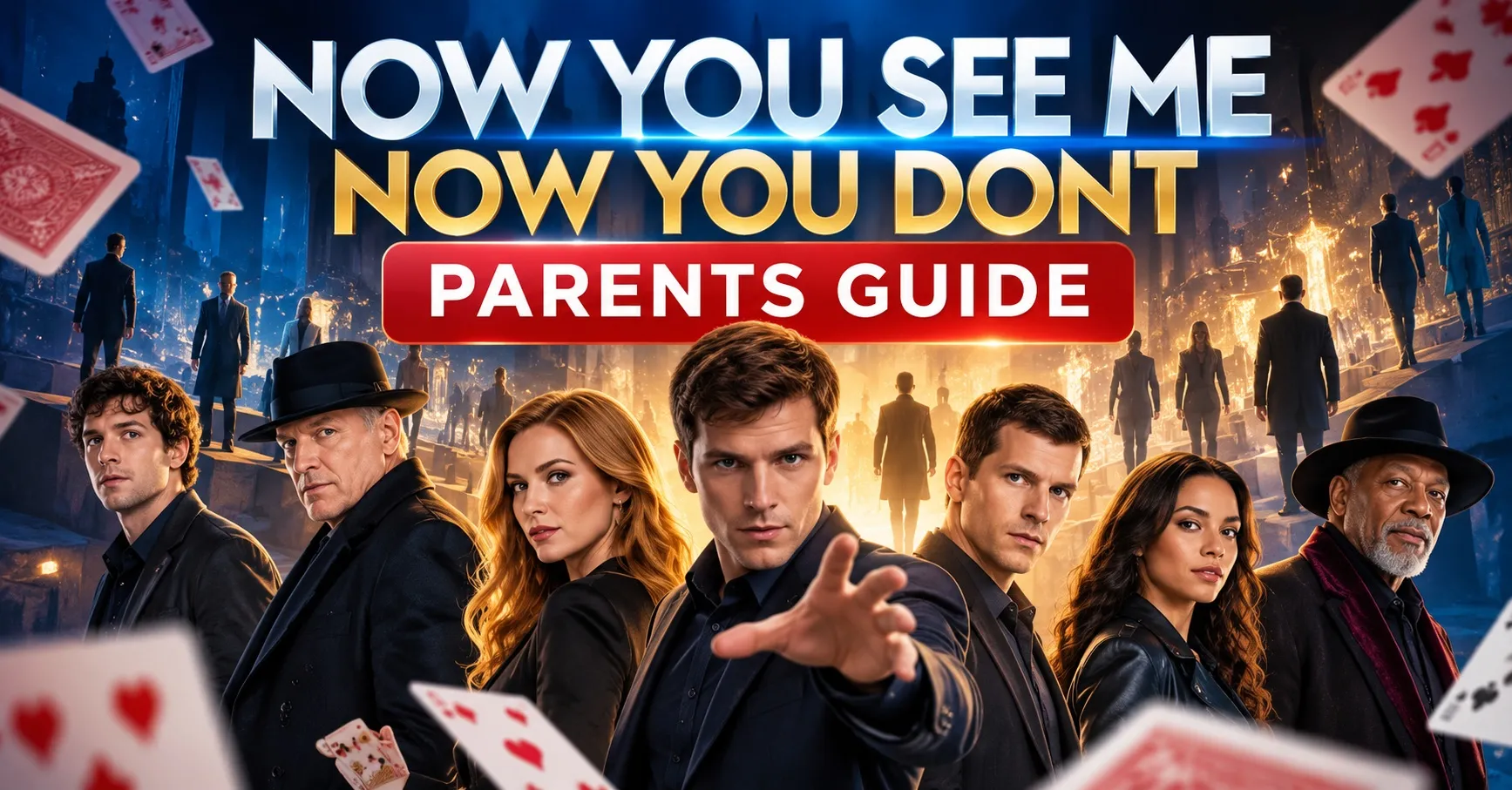
Can Kids Watch Now You See Me: Now You Don’t?
At a Glance: Age Recommendation & MPAA Rating
For most families, Now You See Me: Now You Don’t (widely marketed as Now You See Me 3) is best suited for teenagers aged 13 and older. Distributed by Lionsgate and directed by Ruben Fleischer, the film carries an official MPAA rating of PG-13 for sequence violence, strong language, and suggestive references.
Official MPAA Rating: PG-13 (Parents Strongly Cautioned)
Target Audience Age: Recommended strictly for ages 13+ due to mature thematic elements
Production Studio: Lionsgate
Director: Ruben Fleischer
Parents should note that while the stage illusions and magic tricks maintain the signature flair of the franchise, the intensity and edge have ratcheted up compared to lighter family fare. Younger children may find certain confrontation scenes and suspenseful trap sequences frightening.
The Quick Summary for Parents
If you are deciding whether your child can handle this threequel, the fast-paced magic tricks and Robin Hood-style heists are balanced out by higher-stakes peril, gun-related threats, and rougher dialogue than previous installments. For a comprehensive scene-by-scene content audit, consult the official IMDb Parental Guide before granting viewing approval.
Key Content Triggers: Features moderate physical combat, weapon threats, and around a dozen profanities.
Thematic Elements: Explores complex criminal syndicates, money laundering plots, and simulated high-stress danger.
Suitability Advice: Ideal for teens who enjoy slick crime thrillers, but generally unsuited for pre-teens or younger children.
Weighing these factors ensures you can make an informed, confident decision tailored to your household standards and your child’s maturity level.
Movie Overview & Core Themes: What to Expect
Plot Summary & Franchise Background
This high-octane heist thriller reunites The Four Horsemen—featuring illusionists like J. Daniel Atlas, Merritt McKinney, and Henley Reeves—as they stage breathtaking magic tricks to expose corporate corruption and systemic crime on a global scale. As the third major installment in the franchise, the film blends grand stage spectacles with high-stakes cinematic danger.
The Return of the Illusions: The narrative centers around elaborate spectacles that double as sophisticated financial heists.
Familiar and Fresh Faces: Master illusionists return alongside new recruits to pull off seemingly impossible corporate takedowns.
Expanded Scope: The team travels across international borders, significantly escalating the cinematic scale and intensity from prior entries.
The Robin Hood Dilemma: Vigilante Justice vs. Law Enforcement
The core moral conflict revolves around a Robin Hood-style vigilante philosophy, where characters commit illegal acts and grand theft under the banner of redistributing wealth and fighting institutional corruption, forcing viewers to weigh criminal accountability against corporate greed. While the protagonists present themselves as modern-day heroes, their methods completely bypass standard legal channels.
Glorification of Crime: The narrative frequently paints law-breaking in a glamorous light, rewarding the illusionists for outsmarting global law enforcement.
Anti-Establishment Antagonists: The primary targets are corrupt executives, making the illegal heists feel entirely justified within the fictional universe.
Parental Discussion Point: This dynamic offers a strong conversational springboard for parents to discuss the real-world boundary between cinematic fantasy and actual legal consequences.
Violence, Language, and Substance Use
Violence, Action, and Peril Scenes
Parents evaluating physical intensity will find a content breakdown revealing moderate action sequences, including close-quarters fistfights, theatrical stunts involving a fake severed arm, a tense box filling with sand trap, brief blood displays, and a sudden fatal shooting during a high-stakes standoff.
Staged Peril and Illusionary Danger: Several magic tricks feature high-pressure containment traps, such as a box filling with sand, designed to create intense suspense without graphic gore.
Physical Confrontations: Characters engage in fast-paced fistfights and tactical skirmishes, resulting in minor bruising and temporary immobilization.
Lethal Threats: A pivotal plot twist introduces a sudden fatal shooting accompanied by minimal blood, marking a darker shift from earlier franchise entries.
Profanity and Language Details
Linguistic content features a moderate amount of profanity distributed across high-stress dialogue exchanges. While standard mild cursing appears frequently throughout the runtime, the prohibited f-word is used sparingly, keeping the overall language standard for a PG-13 threshold.
Frequency of Slang: Milder terms like “damn,” “hell,” and “crap” are used casually by supporting cast members during heist planning.
Regulated Expletives: The f-word is restricted to a couple of isolated, non-sexual instances, aligning with typical studio guidelines for teen-accessible action features.
Tone of Dialogue: Interactions emphasize witty banter, tech-heavy jargon, and rapid-fire deception over aggressive verbal abuse.
Drinking, Drugs, and Substance References
Substance references are minimal and largely played for comedic relief rather than serious glorification. Specific dialogue points highlight a laid-back character described as a stoner who casually mentions consuming cannabis-infused gummies and edible products during brief downtime moments.
Alcohol Consumption: Main characters occasionally sip wine or cocktails in upscale lounge settings following successful heists.
Informal Substance Mentions: Cannabis edibles and gummies are referenced lightly through dialogue, reflecting contemporary lifestyle depictions without detailed consumption scenes.
Absence of Hard Drugs: There are no visual depictions or references involving illicit hard drugs, keeping substance use relatively mild.
Sex, Romance, and Attire
Romantic and physical elements remain strictly subdued, focusing entirely on professional partnership and stage chemistry. Visual aesthetics emphasize high-fashion wardrobe choices, featuring tailored suits for men and stylish, form-fitting evening wear including low-cut dresses for female illusionists.
Romantic Dynamics: Interpersonal relationships remain platonic or involve subtle, flirtatious banter without any explicit romantic or sexual encounters.
Costume Aesthetics: Stage outfits and gala attire lean into glamorous, theatrical styles, including sleek suits and elegant, low-cut dresses.
Implicit Modesty: Physical intimacy is limited to occasional embraces or theatrical stage positioning, ensuring the film remains entirely safe from explicit adult content.
Visual Intensity Context: Are the Scary Scenes Too Much for Kids?
Separating Magic Tricks from Real Danger
When evaluating visual intensity, parents must realize that high-stress moments like a box filling with sand or a fake severed arm are actually comedic stage tricks or elaborate illusions rather than graphic horror, ensuring the overall tone remains safely theatrical and non-lethal for viewers. The film consciously frames dangerous-looking stunts as masterclasses in deception rather than genuine threats of violence.
Theatrical Misdirection: Frightening scenarios are consistently defused by comedic reveals, showing that the danger was entirely part of the illusionists’ master plan.
Slapstick and Spectacle: Special effects focus on jaw-dropping magical scale rather than blood and gore, keeping the visual presentation firmly aligned with PG-13 adventure tropes.
Contextual Safety: Children who understand the concept of stage magic will easily recognize that characters are performing choreographed stunts rather than facing authentic mortal peril.
How Sensitive Kids Might React to High-Stakes Peril
Sensitive viewers and younger children may still struggle with age appropriateness when confronted with fast-paced theatrical suspense, sudden weapon brandishing, and intense confrontation sequences, making it crucial to gauge individual emotional maturity before letting pre-teens watch. Even simulated danger can trigger anxiety for kids who take the narrative stakes too literally.
Pacing and Adrenaline: The constant twists and sudden shifts in momentum can overwhelm children who prefer predictable, low-stress media.
Threat Recognition: While adults see harmless stage tricks, younger minds might focus heavily on the menacing villains and gun threats.
Parental Pre-Screening: Checking specific timestamps or reading detailed spoiler summaries helps parents protect highly sensitive children from unexpected bouts of cinematic tension.
Franchise Comparison: Is Now You See Me 3 Safer Than Parts 1 and 2?
Comparing Now You See Me 3 with Parts 1 and 2
When conducting a franchise comparison across the trilogy, Now You See Me 3 maintains an identical PG-13 consistency to its predecessors, offering a similar blend of high-tech illusions, global caper plots, and stylized action without significantly raising or lowering the baseline maturity level.
Consistent Rating Tier: Just like the first two films, the threequel targets teenage and adult audiences through slick, fast-paced heist mechanics rather than explicit or graphic content.
Evolution of the Ensemble: While Now You See Me 2 and the original film centered tightly on the original illusionists, the third installment introduces a younger generation of rookie magicians, shifting some interpersonal dynamics while keeping the core caper tone intact.
Thematic Familiarity: Parents who allowed children to watch the previous movies will find very few surprises here, as the balance of cartoonish villainy, clever misdirection, and mild peril remains largely unchanged.
Has the Franchise Become More Violent or Mature?
There has been no dramatic tone shift or escalation in overall maturity level across the series, though the third movie does feature occasional darker stakes, such as a simulated execution trap and a sudden shooting, which align closely with the edge found in Now You See Me 2.
Staged Peril vs. Real Harm: Similar to past entries, high-intensity scenes rely on optical illusions, trick props, and last-second escapes rather than gruesome or bloody violence.
Language and Humour Profile: Profanity counts and suggestive innuendos remain tightly regulated within studio PG-13 boundaries, preventing the script from crossing into harder R-rated territory.
Overall Verdict for Families: If your household comfortably navigated the first two chapters without distress, this latest installment presents an equivalent viewing experience suited for the same age group.
Video Review and Visual Breakdown
Watch: Comprehensive Video Review and Parent Guide Breakdown
For parents seeking a multimedia perspective, a comprehensive video review and visual breakdown offers invaluable context on the film’s tone, pacing, and overall family suitability. Watching a trusted critic’s assessment bridges the gap between written content ratings and actual cinematic execution.
Visualizing the Tone: Video analyses provide immediate visual cues regarding the movie’s lighting, action intensity, and suspense levels.
Reviewer Consensus: Hearing a detailed parent guide video discussion helps clarify ambiguous elements like comedic violence versus genuine peril.
Featured Critique: You can explore a detailed breakdown of the film’s style and pacing via the Jeremy Jahns Movie Review.
Alternative Perspective: Additional commentary on the heist mechanics and family appeal is available through the 3C Films Review.
Parent-Child Discussion Starters & Final Recommendation
Topics to Discuss with Your Teen After Watching
Engaging your teenager with targeted discussion starters transforms a standard family movie night into an invaluable opportunity to explore complex moral boundaries, analyze tricky ethical questions regarding vigilante justice, and debate whether noble intentions truly justify breaking the law.
Movies that romanticize financial heists offer excellent teaching moments for household values. Use these conversational prompts to unpack the film’s themes:
The Ends vs. The Means: Ask your teen if stealing from corrupt executives is ever ethically acceptable in the real world, or if illegal acts undermine the social contract.
Fantasy vs. Reality: Discuss how cinematic magic tricks and high-stakes escapes differ drastically from actual criminal investigations and permanent legal consequences.
Character Motivations: Examine whether the illusionists act out of genuine altruism or primarily for the adrenaline rush and public validation.
Should You Take Your Family to See It?
The final recommendation for families is to reserve this PG-13 heist thriller strictly for teenagers aged 13 and older who enjoy clever magic tricks and fast-paced capers, while bypassing it for younger children or sensitive viewers due to intense sequence peril and weapon threats.
Evaluating your household’s media boundaries ensures an enjoyable cinematic experience:
Ideal for Teens: Mature adolescents who appreciate slick corporate takedowns and stylized action will find plenty of entertaining spectacle.
Skip for Pre-Teens: Younger children may feel overwhelmed by sudden confrontation scenes, weapon standoffs, and the complex web of criminal conspiracies.
Balanced Screening: Reviewing parental guides beforehand allows you to tailor the viewing experience to your teenager’s specific emotional maturity.

