 Evaluating Monty Python and the Holy Grail for Families
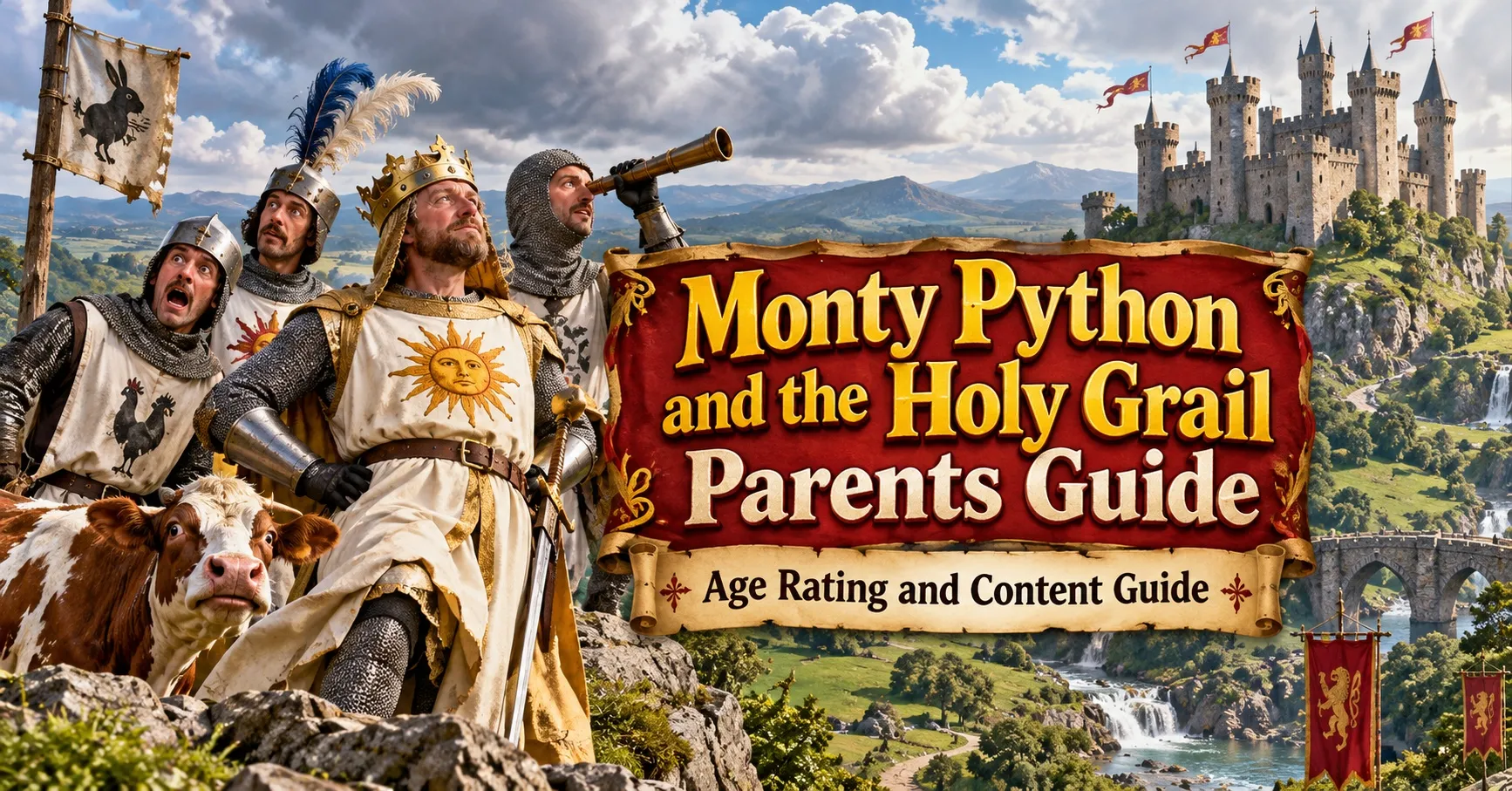
Is Monty Python and the Holy Grail Safe for Your Child?
Monty Python and the Holy Grail (1975) carries an official MPAA PG rating, but contemporary standards position it closer to a mild PG-13. Most children under the age of 12 will find the dry British satire confusing, making 13 the ideal baseline age for full comprehension.
Parents evaluating this classic comedy should focus on media maturity rather than vintage ratings. Although the film relies heavily on absurd slapstick rather than genuine malice, specific scenes require advance previewing for younger audiences.
At-a-Glance Content Summary
A quick content warning review shows that the movie features cartoonish dismemberment, frequent crude British slang, and a notoriously suggestive sequence inside Castle Anthrax. The production entirely avoids realistic violence, explicit nudity, and severe profanity.
Official Rating: PG (1975 theatrical classification)
Modern Content Equivalent: Mild PG-13
Recommended Age Threshold: Ages 13 and up (or 11+ with selective scene skipping)
Primary Content Flags: Slapstick gore, crude humor, and mild sexual innuendo
Age-by-Age Breakdown and Content Matrix
Under 9: Why It’s Not Recommended for Young Children
Children under nine years old will generally find Monty Python and the Holy Grail confusing, boring, or visually jarring rather than funny. While the violence is entirely slapstick, young minds struggle to process dead-pan British delivery, historical satires, and rapid-fire absurdist dialogue that define the film’s style.
Pacing Issues: The narrative structure lacks traditional children’s movie momentum, relying on disjointed medieval sketches rather than a steady, linear plot.
Visual Distress: Scenes featuring plague-ridden cartloads, the Black Knight’s dismemberment, and the bloodthirsty Killer Rabbit can trigger anxiety or nightmares despite their comedic framing.
Ages 10–12: The Threshold of Comprehension (Parental Guidance Required)
Pre-teens aged ten to twelve sit directly on the comprehension threshold where they may appreciate physical comedy while missing the complex historical context and dry wordplay. Active parental guidance is strongly recommended during this developmental window to evaluate maturity levels.
Selective Humor Appreciation: Kids in this bracket usually laugh at the coconut horse-hoof gags and flying livestock, but often lose interest during lengthy dialogue exchanges.
Content Management: Parents should evaluate whether their child is ready for suggestive sequences like Castle Anthrax, which introduce mature themes requiring parental context.
Ages 13+ and Teens: The Sweet Spot for Absurdist Humor
Teenagers aged thirteen and older represent the absolute sweet spot for appreciating the film’s unique brand of British absurdist humor and sophisticated satire. By this stage, youths easily distinguish between genuine cinematic malice and exaggerated comedic parody, matching modern PG-13 expectations.
Cultural Touchstone: Watching the film introduces teens to classic cinematic comedy references that frequently appear across modern gaming culture and internet memes.
Independent Viewing: Most teens navigate the film’s content level effortlessly without requiring parental scene filtering or continuous explanation.
The Parent’s Content Matrix
| Age Group | Overall Suitability | Violence & Gore Level | Language & Slang | Sexual Innuendo |
| Under 9 | Not Recommended | Moderate (Slapstick/Fake Blood) | Mild Cursing | Low (Flies Over Head) |
| Ages 10–12 | Parental Guidance | Moderate (Cartoonish Dismemberment) | Moderate British Slang | Moderate (Requires Context) |
| Ages 13+ | Highly Suitable | Moderate (Satirical Gore) | Moderate Profanity | Moderate (Mild Innuendo) |
Violence, Gore, and Slapstick Comedy
The Black Knight Dismemberment Scene
The iconic Black Knight sequence features extreme cartoonish dismemberment where both arms and legs are systematically severed during a comedic sword fight. Despite gushing bright red fake blood and flying severed limbs, the scene plays entirely for theatrical absurdity rather than realistic or terrifying violence.
The Flesh Wound Gag: The knight casually insists his amputations are merely “just a flesh wound” while completely immobilized on the ground.
Child Audience Impact: Younger children may find the sudden loss of limbs visually shocking, but the exaggerated stagecraft prevents genuine fear.
The Killer Rabbit of Caerbannog Sequence
The Killer Rabbit of Caerbannog sequence presents an innocent-looking white rabbit that unexpectedly slaughters multiple armored knights with rapid, theatrical decapitations. While featuring violent combat on paper, the sheer absurdity of a fluffy animal defeating legendary warriors ensures a purely comedic reaction.
Subverted Expectations: Armored knights are thrown backward with dramatic flair as they meet their sudden doom against the tiny beast.
Tone and Context: The sequence leans into medieval parody rather than graphic horror, though sensitive viewers might find the sudden creature attacks surprising.
Plague Cart and Grim Historical Satire (“Bring Out Your Dead!”)
The medieval plague sequence captures grim historical satire through the dark humor of villagers tossing bodies onto passing carts. This segment uses deadpan dialogue delivery to mock historical calamity rather than dwelling on explicit gore or visceral suffering.
Iconic Exchanges: Features memorable dark humor as citizens casually negotiate whether half-alive relatives can be tossed onto the pile.
Intellectual Framing: Presents a bleak historical topic through surreal comedy, making it intellectually abstract rather than emotionally distressing for mature audiences.
Navigating Sensitive Content: The Castle Anthrax and Innuendo Guide
The Castle Anthrax Sequence Explained
The Castle Anthrax sequence features Sir Galahad arriving at a castle populated entirely by young women who openly proposition him with mature suggestions. Parents seeking to skip mature adult themes can safely fast-forward this sequence between the swamp castle and the bridge of death without missing essential plot elements.
Character Interactions: The inhabitants surround Sir Galahad, discussing spanking and offering explicit proposals while he remains fully clothed and visibly bewildered.
Skipping Strategy: This self-contained segment lasts approximately five minutes, making it easy to bypass for families watching with younger teenagers.
Visual Gags, Innuendo, and Animated Nudity
The film integrates brief, surreal visual gags and mild verbal innuendo throughout its runtime that require parental awareness. Most suggestive lines rely on double entendres that typically fly right over younger viewers’ heads while registering mildly for older teens.
The Landowner Dialogue: A memorable joke describes a potential bride as having “huge tracts of land,” functioning simultaneously as property satire and a visual pun.
Cartoon Interludes: Animated sequences feature brief cartoon male backsides and whimsical musical gags played with rear ends, preserving a silly aesthetic instead of explicit live-action exposure.
Language, Profanity, and Insult Breakdown
Mild British Slang and Cursing
Monty Python and the Holy Grail features moderate British profanity and regional slang rather than harsh modern swearing. Parents can expect occasional mild expletives, religious exclamations, and British vernacular that feel dated rather than offensive by contemporary standards.
Commonly Used Terms: Dialogue includes mild expressions such as “bloody hell,” “bugger,” “bastards,” and “sod” integrated into heated comedic arguments.
Religious Exclamations: Characters frequently use phrases like “Jesus Christ” as exclamations during chaotic medieval encounters.
Database Tracking: For a precise, scene-by-scene tracking of every specific curse word or phrase used throughout the film, consult the official IMDb Parental Guide database reference source.
Comedic Insults and Threats
The film relies heavily on theatrical, over-the-top insults and absurd verbal threats rather than genuine malice or hostility. These stylized exchanges are delivered with such surreal comedic exaggeration that children quickly recognize them as pure performance rather than real-world bullying.
The French Taunters: Iconic sequences feature castle guards shouting absurd insults, including the famous line, “I fart in your general direction.”
Stylized Aggression: Knights frequently trade ridiculous medieval taunts and violent-sounding verbal threats that rely on exaggerated imagery rather than realistic harassment.
Linguistic Humor: The script prioritizes pomposity and linguistic wordplay, ensuring the dialogue feels playful rather than genuinely abusive.
The Generational Humor Gap: Will Modern Kids Actually Get It?
Dry British Absurdism vs. Modern Fast-Paced Comedy
Modern kids raised on rapid-fire YouTube shorts and high-octane superhero films often struggle with the deliberate, slow-burn pacing of 1970s British comedy. The humor relies on dry deadpan delivery and historical satire rather than instant visual gratification, creating a distinct generational humor gap that parents must anticipate before pressing play.
Pacing Contrast: Contemporary youth entertainment prioritizes constant stimulation, whereas Monty Python employs extended pauses, theatrical monologues, and deadpan silence to build absurd scenarios.
Historical Context: Much of the film’s satire targets medieval tropes, Arthurian legends, and British sociopolitical structures that lack immediate cultural relevance for today’s teenagers without prior context.
How to Prep Your Teenager for the Pacing and Style
Bridging the generational humor gap requires light framing rather than heavy-handed explanation before starting the movie. Letting teenagers know in advance that the film is an intentionally silly, low-budget theatrical parody helps adjust their expectations away from modern cinematic polish.
Highlight Internet Roots: Show teens how classic memes and gaming references originate directly from the film’s iconic sketches, instantly connecting vintage jokes to modern digital culture.
Embrace the Absurdity: Encourage young viewers to lean into the nonsensical progression of scenes, transforming a potentially confusing viewing experience into an entertaining shared family movie night.
Frequently Asked Questions
Is Monty Python and the Holy Grail OK for kids?
Monty Python and the Holy Grail is generally appropriate for kids aged 13 and older, while mature tweens aged 11 to 12 can watch with parental guidance. Although the movie carries an official 1975 PG rating, modern viewing standards position it closer to a mild PG-13 due to slapstick violence and suggestive elements.
Maturity Threshold: Pre-teens and teenagers possess the cognitive development required to understand dry historical satire and absurdist British humor.
Content Awareness: Parents should review the specific violence and innuendo flags before streaming the movie as a family.
Can my 7-year-old watch it?
No, watching Monty Python and the Holy Grail is not recommended for seven-year-olds. Young children will find the film’s pacing slow and the deadpan dialogue completely unengaging, while stylized violence like dismemberment and the Killer Rabbit scene can cause unnecessary distress.
Comprehension Barrier: Seven-year-olds lack the historical knowledge and media literacy needed to process surreal medieval sketch comedy.
Fright Potential: Sudden theatrical gore and creature attacks can be startling for early elementary school viewers.
Which Monty Python movie was banned? (Clarifying Holy Grail vs. Life of Brian)
Monty Python’s Life of Brian is the film that faced widespread religious bans and censorship upon its 1979 release, whereas The Holy Grail did not. Parents researching content warnings frequently confuse the two titles, leading to misplaced concerns about religious controversy in The Holy Grail.
Religious Satire Distinction: Life of Brian parodied biblical-era tropes, triggering international protests, whereas The Holy Grail targets Arthurian folklore and medieval chivalry.
Streaming Guide Clarity: When planning a family movie night, rest assured that The Holy Grail avoids the specific ideological controversies associated with its sister film.

