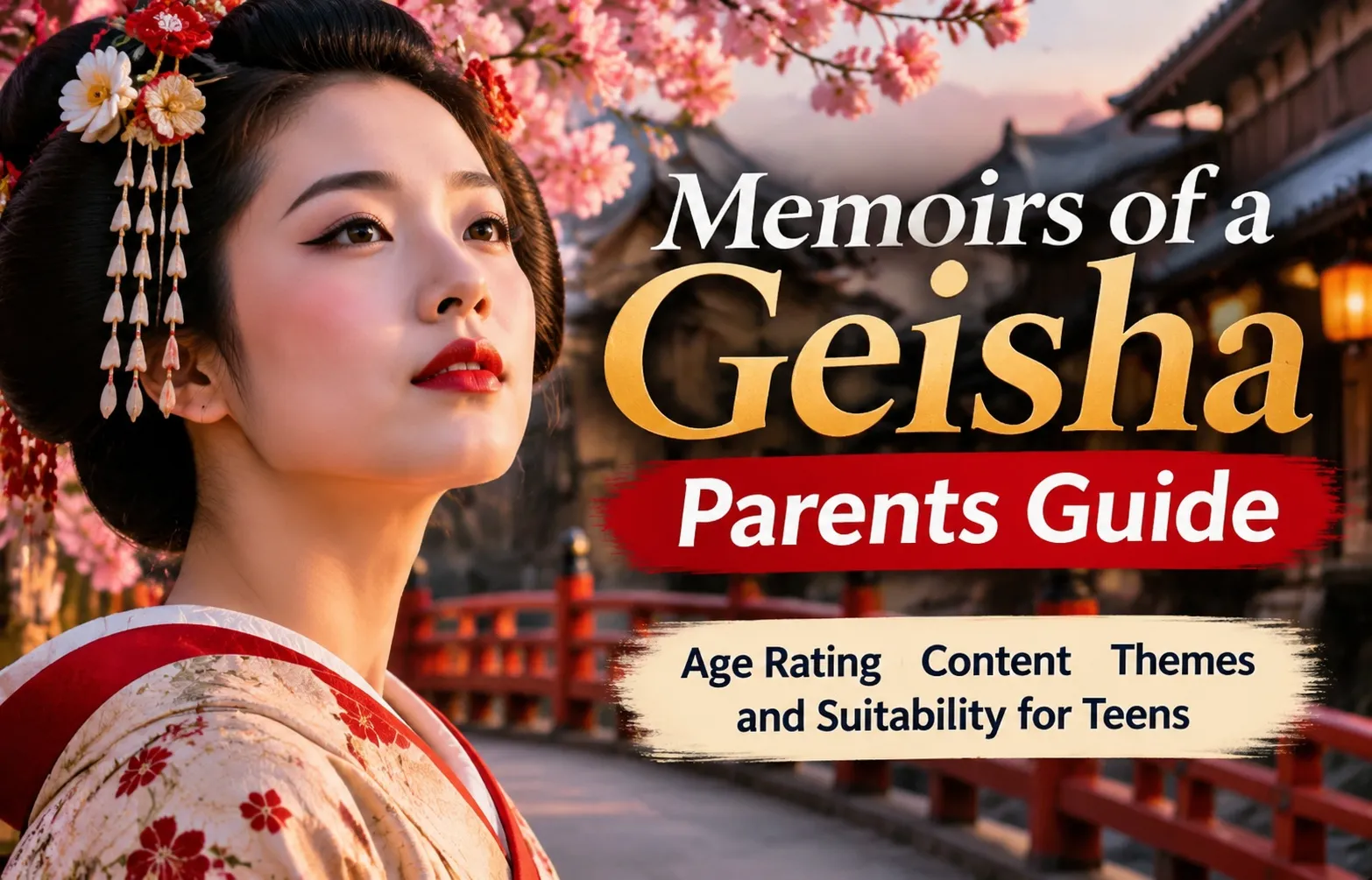
 Deciding whether a historical drama is appropriate for a teenager requires looking beyond standard ratings to examine specific thematic elements. The 2005 cinematic adaptation of Memoirs of a Geisha carries a specific classification that prompts many parents to research its safety profile before allowing younger viewers to watch.
Our comprehensive editorial analysis provides an immediate safety breakdown, age recommendations, and essential context to help parents make an informed decision instantly.
Quick Facts & Age Rating Summary (At a Glance)
Understanding the official certifications and expert child-development recommendations establishes a baseline for how mature the content is. The film bridges the gap between historical epic and intense interpersonal drama.
- Official MPAA Rating: PG-13 for mature subject matter and some sexual content.
- Common Sense Media Age Recommendation: 13+ (with parental guidance for sensitive themes).
- Director: Rob Marshall
- Lead Cast: Ziyi Zhang, Ken Watanabe, Gong Li, Michelle Yeoh
- Runtime: 143 minutes
What Is the Movie About? (Brief Plot Context)
Set in Japan before, during, and after World War II, the narrative follows a young girl named Chiyo who is sold away from her impoverished fishing village into a Kyoto geisha house. Renamed Sayuri, she navigates a rigorous, highly competitive training system governed by strict social hierarchy and psychological pressure.
The storyline explores themes of endurance, unrequited love, and survival amid global conflict. While the visual aesthetic is masterfully crafted, the underlying plot touches upon heavy emotional struggles, domestic servitude, and transactional relationships that require mature comprehension.
Why Is It Rated PG-13?
Evaluating the safety and appropriateness of Memoirs of a Geisha requires a granular examination of its core content categories. The Motion Picture Association (MPA) assigned a PG-13 rating primarily due to mature subject matter and brief sexual elements, but parents often need deeper context regarding the physical and emotional intensity of the narrative.
The structured breakdown below details what viewers can expect across sex, violence, language, and substance use categories to help parents assess maturity levels.
Sex, Nudity, and Romantic Themes
The narrative revolves around the traditional geisha arts, where physical beauty, charm, and romantic patronage are central economic drivers. While the film avoids explicit graphic intimacy, it features several suggestive elements and interpersonal tensions.
- Communal Bathing: Traditional bathhouse and washing sequences depict partial nudity, focusing on bare shoulders, backs, and stylized modesty rather than full anatomical exposure.
- Implied Assault: Certain plot points involve non-consensual situations, coercion, and threatening encounters orchestrated by rival characters or predatory patrons.
- Transactional Romance: The storyline touches upon historical practices such as the mizuage ritual, which represents a young geisha’s transition to womanhood through a financial sponsor.
Violence, Abuse, and Historical Hardship
Much of the film’s emotional weight stems from physical and psychological distress experienced by characters during their upbringing and wartime displacement. Young viewers may find these sequences particularly distressing.
- Domestic Servitude: Child characters are sold into indentured servitude, facing harsh living conditions, strict debt bondage, and constant surveillance.
- Corporal Punishment: Characters undergo physical discipline, including harsh physical grooming methods, confinement, and corporal corrections within the geisha house.
- Emotional Abuse and Bullying: Intense psychological rivalries, backstabbing, and severe emotional manipulation dominate the relationships among the women.
- Wartime Devastation: Later acts depict the chaos of World War II, featuring air raids, structural bombings, military roundups, and widespread poverty.
Profanity and Language Usage
Language in the film remains relatively restrained compared to modern gritty dramas, but it features occasional mature terminology reflective of historical power dynamics.
- Mild Insults: Terms such as “whore” and “bastard” are used by characters to demean rivals or express intense social hostility.
- Thematic Dialogues: Conversations frequently address adult concepts, debt obligations, social status, and survival strategies in a restrictive society.
Alcohol, Drugs, and Smoking
Substance use is depicted regularly as a social norm within elite entertainment quarters, banquet halls, and historical nightlife settings.
- Frequent Alcohol Consumption: Adult characters frequently consume traditional sake, beer, and whiskey during banquets, business negotiations, and private gatherings.
- Pervasive Smoking: Cigarette smoking is common among multiple prominent characters throughout the runtime, reflecting the cultural styling of mid-20th-century Japan.
Movie vs. Book: Key Differences Parents Need to Know
Teens frequently encounter Arthur Golden’s bestselling novel as part of independent reading assignments or personal interest, often before watching the visual adaptation. Understanding how the literary source material differs from the 2005 film helps parents evaluate the appropriate maturity level for younger readers.
For comprehensive community-vetted timestamps and detailed content flags on the cinematic adaptation, you can review the official IMDb Parental Guide for scene-by-scene documentation.
Is the Book More Intense Than the 2005 Movie Adaptation?
The original novel by Arthur Golden is significantly more granular, psychological, and graphic than the PG-13 film adaptation directed by Rob Marshall. While the movie softens several raw narrative elements to maintain a mainstream rating, the book dives much deeper into the harsh realities of the geisha world.
- Descriptive Realism: Literary descriptions of poverty, physical deprivation, and social subordination carry a heavier emotional weight on the page than on screen.
- Character Psychology: The internal monologue of Sayuri in the novel provides explicit insight into transactional relationships and survival tactics that are only implied visually in the film.
- Narrative Pacing: The book dedicates extensive passages to the intricate training rituals, economic realities, and social hierarchies of Kyoto’s Okiya houses.
Narrative Tone and Descriptive Content Variations
Parents should note that thematic elements involving coercion, servitude, and adult relationships are handled with cinematic restraint in the movie, whereas the novel explores them with unfiltered historical framing.
- Visual vs. Literary Impact: Cinematic choices frame sensitive scenes through artistic lighting, costume design, and dramatic pacing, toning down the visceral shock factor found in the text.
- Thematic Depth: The novel offers broader historical context regarding pre-war and post-war Japan, making it a valuable literary study for older mature teens (ages 16+) with sufficient context.
Frequently Asked Questions
Addressing common reader queries directly helps secure top-ranking featured snippets on Google search results pages. Below are precise answers to the most frequently asked questions regarding age appropriateness, character dynamics, and historical controversies surrounding the story.
Is Memoirs of a Geisha appropriate for middle schoolers (ages 13–14)?
Generally, Memoirs of a Geisha is not recommended for early middle schoolers aged 13 to 14 without prior parental screening. While the film carries a PG-13 rating, its heavy emotional themes, depictions of child servitude, and mature interpersonal dynamics require a level of emotional maturity typically found in older high school teens (ages 15+).
- Developmental Readiness: Younger teens may struggle to process historical concepts like debt bondage and psychological rivalry among peers.
- Parental Involvement: If watched by a 13- or 14-year-old, active adult guidance helps contextualize the historical setting and complex dramatic conflicts.
What was the age gap and relationship dynamic in the story?
The central romantic dynamic involves Sayuri and the Chairman, a mature businessman she meets as an adolescent and later pursues as an adult geisha. When they first meet, Sayuri is a young girl around nine or ten years old, while the Chairman is an established adult man in his late twenties or early thirties.
- Long-Term Devotion: The narrative spans decades, and their romantic relationship does not materialize until Sayuri is an adult woman practicing professionally in the Kyoto geisha district.
- Mentor Dynamics: The Chairman acts as an inspiring figure who gives Sayuri a renewed sense of purpose during her lowest moments of childhood servitude.
Did the baron take Sayuri’s virginity? (Clearing up the mizuage plotline)
No, the Baron did not take Sayuri’s virginity. In the storyline, wealthy patrons bid for the right to sponsor a geisha’s mizuage, which is the traditional ritual marking her transition to a full-fledged geisha.
- The Bidding Process: While the wealthy Baron places a massive financial bid to win Sayuri’s mizuage sponsorship, circumstances and rival interventions prevent him from completing it.
- Alternative Resolution: Ultimately, a different benefactor provides the necessary funds to secure her status without the Baron’s direct involvement.
What is the main controversy surrounding the movie and book?
Both the novel and the 2005 film faced significant international controversy upon release, particularly regarding cultural casting choices and historical representation within Asian communities.
- Casting Decisions: The film sparked backlash in China and Japan by casting prominent Chinese actresses (Ziyi Zhang, Gong Li, and Michelle Yeoh) to portray iconic Japanese geishas.
- Historical Interpretations: Some critics argued that the narrative sensationalized or misrepresented traditional geisha culture through a Westernized lens, blending historical fact with dramatic fiction.
Final Parent Verdict & Discussion Guide
Evaluating entertainment choices with strong historical and dramatic depth requires balancing artistic appreciation with responsible media literacy. Providing a clear concluding verdict and talking points helps parents transform a viewing experience into a valuable educational conversation.
Equipping teens with the right historical framework ensures they understand the nuances of 20th-century Japan without absorbing misconceptions about traditional arts.
Final Recommendation: Who Should Watch It?
Memoirs of a Geisha is best suited for mature older teens aged 15 and above who possess the emotional maturity to process heavy dramatic conflicts and historical hardships. Early teens may find the pacing slow or the themes of servitude and rivalry distressing.
- Ideal Audience: High school upperclassmen interested in historical dramas, period costume design, and international cinema.
- Prerequisite: Viewers should be prepared for a slow-burn narrative focusing on psychological survival rather than fast-paced action or conventional romance.
How to Discuss Historical Context and Sensitive Themes with Teens
Watching the film together or following up with a guided discussion allows parents to address sensitive elements constructively. Framing the story within actual history deepens a teenager’s critical thinking skills.
- Explore World War II Impact: Discuss how wartime devastation, economic collapse, and American occupation reshaped traditional Japanese society and livelihood.
- Separate Fact From Fiction: Clarify that the narrative is a dramatized Hollywood adaptation rather than an exact documentary on the Kyoto geisha district.
- Address Social Mobility: Talk about the severe economic limitations faced by women in mid-20th-century historical settings compared to modern opportunities.

