 The Taking of Deborah Logan Parents Guide
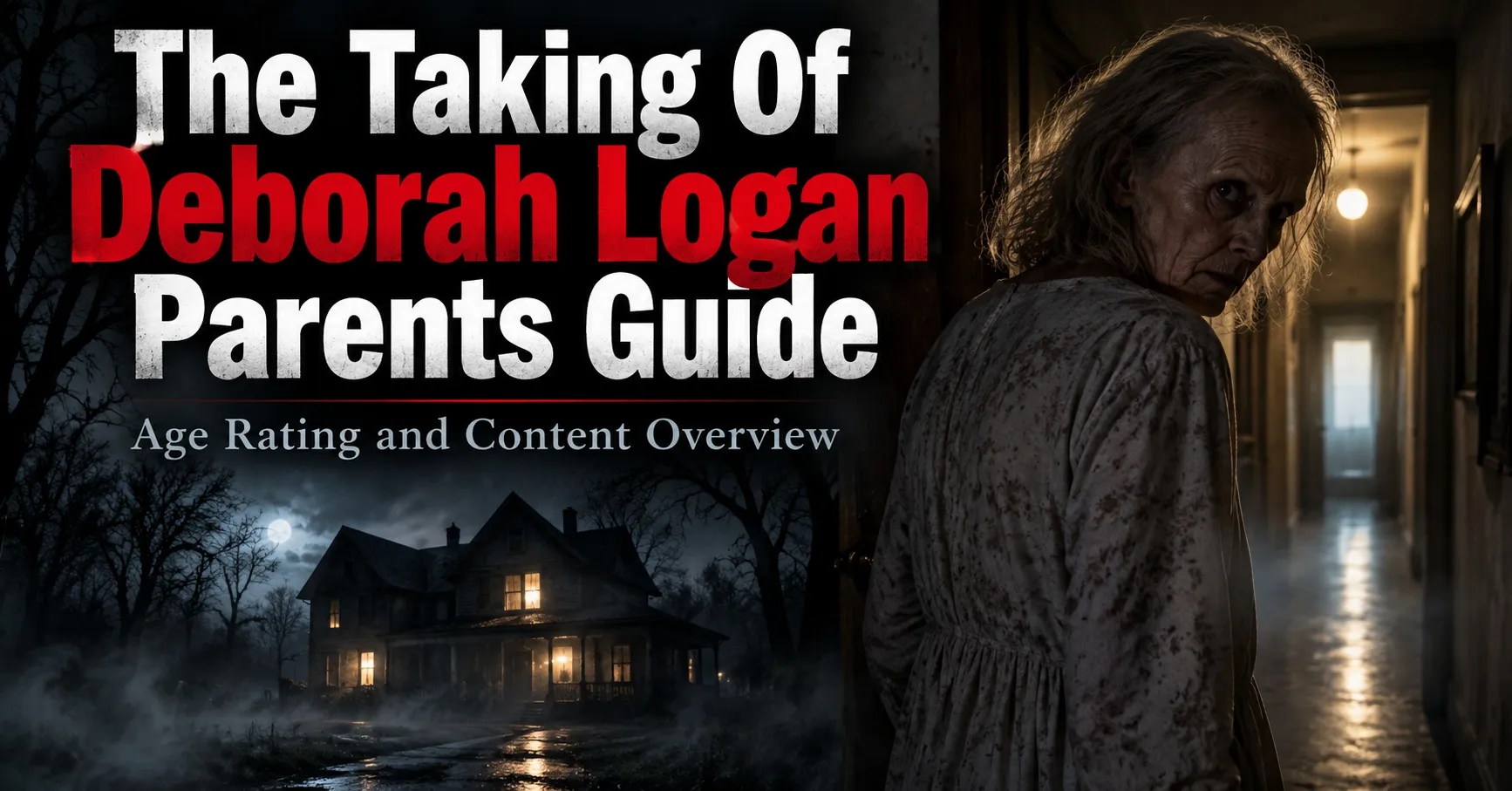
Is The Taking of Deborah Logan Too Scary?
The Taking of Deborah Logan (2014) is an intense, psychologically unsettling found-footage horror film featuring severe body horror, supernatural possession, and distressing depictions of degenerative illness. It is strictly unsuitable for younger teens, pre-teens, or sensitive viewers due to its sustained atmospheric dread and genuinely harrowing visual sequences.
Tone & Atmosphere: Relentlessly bleak, shifting from a clinical documentary style into a terrifying occult nightmare.
Viewer Suitability: Recommended exclusively for mature horror enthusiasts aged 17 and older.
Official MPAA Rating & Age Recommendation
The Motion Picture Association (MPAA) officially rated the film R for bloody horror violence, disturbing images, and language. Content analysts and parents’ guides advise that viewers should be at least 17 years old to watch independently.
Official Rating: Rated R for explicit gore and psychological terror.
Recommended Age: 17+ (or 15+ with mature parental guidance and prior trigger awareness).
Quick Content Trigger Checklist
Navigating this found-footage film requires advance awareness of specific distressing elements ranging from realistic medical degeneration to visceral supernatural gore. Use this rapid checklist to evaluate potential content triggers before watching.
Medical Distress: Realistic and increasingly horrific depiction of Alzheimer’s disease and cognitive decline.
Body Horror: Extreme physical distortions, including graphic throat and jaw unhinging sequences.
Violence & Gore: Bloody attacks, cannibalistic imagery, and visceral survival horror violence.
Intense Suspense: High-frequency jump scares, claustrophobic settings, and psychological breakdown.
What Is ‘The Taking of Deborah Logan’ About? (The Premise & Real vs. Supernatural Intent Gap)
The Premise: Documenting Alzheimer’s vs. Descending Into Horror
The Taking of Deborah Logan begins as a grounded documentary about Alzheimer’s disease before seamlessly pivoting into a terrifying supernatural possession thriller. This deliberate blend of real-world medical tragedy and occult horror creates a distinct psychological tension that catches unprepared viewers completely off guard.
Documentary Framework: Establishes immediate empathy and clinical realism through the lens of a legitimate medical struggle.
The Intent Gap: Lulls the audience into expecting a conventional drama about caregiving before completely shredding those expectations.
Supernatural Shift: Gradual behavioral anomalies and occult clues hint that something far darker than cognitive decline is taking control.
Media Integration Note: [Official Film Trailer / Video Overview Container – Recommended 16:9 aspect ratio placement here to increase user engagement and dwell time]
Why the Disease-Turn Makes It Uniquely Disturbing
By weaponizing the terrifying symptoms of cognitive decline, the film taps into deep-seated real-world fears of losing one’s mind and identity. This unique psychological horror relies heavily on blurring the lines between physical illness and demonic control, making the terror feel painfully close to home.
Real vs. Supernatural: Blurs medical truth and occult fiction, keeping audiences guessing whether Deborah is simply sick or genuinely possessed.
Loss of Agency: Explores the profound helplessness of watching a loved one’s personality erode, amplified exponentially by malevolent forces.
Psychological Dread: Prioritizes slow-burn dread and existential panic over predictable jump scares.
Violence, Gore, and Disturbing Body Horror
The Taking of Deborah Logan features extreme, visceral body horror and bloody violence that far exceeds standard supernatural thrillers. Viewers should prepare for graphic sequences involving severe physical deterioration, flesh tearing, and unsettling biological transformations that test even seasoned horror fans.
Skin Peeling & Flesh Tearing: Graphic sequences depict severe physical mutilation, including raw skin peeling and intense self-inflicted wounds.
Disturbing Imagery: Features shocking physical contortions, most notably a haunting sequence where Deborah’s jaw and throat unhinge unnaturally.
Gore Level: Heavy blood, open wounds, and visceral survival horror violence that can trigger strong physical discomfort.
Psychological Intensity, Jump Scares, and Sensory Triggers
Psychological terror and sensory overload drive the film’s scariest moments, relying heavily on relentless dread, unexpected jump scares, and claustrophobic settings. Sensitive viewers must navigate intense claustrophobia, flashing lights, and unsettling animal imagery during key subterranean sequences.
Jump Scares: High-frequency, high-impact audio-visual jolts designed to startle the audience abruptly.
Underground Mine Sequence: A terrifying, claustrophobic climax set inside a dark, confined mine tunnel filled with danger and horrific snake imagery.
Sensory Triggers: Contains sudden flashing lights and unsettling animal behaviors that may affect photosensitive or animal-sensitive viewers.
Profanity, Substance Use, and Mild Nudity
Compared to its intense gore, language and substance elements remain moderate and typical for an R-rated horror film. The production incorporates realistic adult dialogue, raw emotional outbursts, and minor substance references without any explicit sexual exploitation.
Profanity: Frequent strong language (including multiple uses of explicit curses) uttered by distressed characters under extreme pressure.
Substance Use: Occasional social drinking and medical context references, but no glamorization of substance abuse.
Nudity & Intimacy: Minimal to no sexual content, keeping the focus entirely on psychological breakdown and physical terror.
Trigger Cross-Referencing: For a granular, time-stamped log of every specific trigger scene, review the IMDb Parental Guide.
Can Teens Watch It? Age Suitability & Maturity Analysis
Is It Appropriate for 15 or 16-Year-Olds?
For 15 or 16-year-old viewers, The Taking of Deborah Logan requires extreme caution and active parental discretion. While experienced horror-loving teens can handle conventional scares, this film introduces heavy psychological dread, medical degradation themes, and intense body horror that can overwhelm younger or sensitive audiences.
Maturity Check: Requires a high tolerance for psychological distress and unsettling themes rather than simple, fast-paced monster thrills.
Parental Supervision: Best viewed alongside a parent or guardian who can help process the movie’s heavy and disturbing nature.
Age Threshold: Officially rated R, meaning streaming guidelines and cinema policies strongly recommend viewers be at least 17 years old.
Why Standard Slashers Compare Differently to This Film
Unlike conventional teen slashers that rely on fast-paced, predictable body counts and detached masked killers, this film delivers deeply personal, psychological terror. The blurring of real-world Alzheimer’s disease with demonic possession creates an emotional weight and chilling atmosphere that standard teen-oriented horror films rarely attempt to tackle.
Predictability vs. Dread: Standard slashers offer fun escapist violence, whereas this mockumentary style feels uncomfortably real and deeply claustrophobic.
The Emotional Toll: The core tragedy focuses on a devoted daughter losing her mother to an escalating nightmare, adding profound emotional heaviness.
Disturbing Realism: The visceral combination of cognitive decline and physical transformation hits much closer to home than typical supernatural fiction.
Frequently Asked Questions (FAQ) to Target PAA Boxes
Why is The Taking of Deborah Logan rated R?
The Motion Picture Association (MPAA) rated The Taking of Deborah Logan R primarily due to its intense bloody horror violence, deeply disturbing visual imagery, and frequent strong language. The film earns this restricted classification through explicit physical mutilation scenes, psychological terror, and visceral body horror.
Graphic Violence and Gore: Features visceral scenes of flesh tearing, brutal attacks, and self-inflicted wounds that push genre boundaries.
Disturbing Imagery: Includes unnatural physical distortions, terrifying transformations, and unsettling medical trauma.
Language: Contains frequent explicit profanity used by characters under extreme emotional distress.
Is The Taking of Deborah Logan based on a true story?
The Taking of Deborah Logan is a complete work of cinematic fiction and is not based on a true story. Despite being presented in a raw, realistic found-footage mockumentary style that mimics a genuine scientific research project, all characters, supernatural possessions, and events are entirely fabricated.
Mockumentary Format: The film uses a documentary crew framework following a student’s Ph.D. thesis on Alzheimer’s disease to build immersive realism.
Fictional Narrative: The terrifying descent into occult possession and serpent-related mythology is purely the product of screenwriters Adam Robitel and Gavin Heffernan.
Real-World Parallels: While the medical progression mimics real cognitive decline, the supernatural elements are strictly fictional horror conventions.
How scary is Deborah Logan compared to other found-footage films?
Compared to standard found-footage horror films that rely heavily on repetitive shaky-cam effects and cheap jump scares, The Taking of Deborah Logan stands out for its uniquely oppressive psychological dread and body horror. It bridges the gap between grounded medical tragedy and occult terror with exceptional effectiveness.
Atmospheric Tension: Builds sustained dread by anchoring its horror in the heartbreaking, recognizable reality of cognitive decay before introducing supernatural elements.
Memorable Sequences: Features standout, viral horror scenes—such as the jaw-unhinging moment—that elevate it well above typical low-budget found-footage releases.
Pacing and Impact: Delivers an escalating sense of panic that avoids standard genre fatigue, keeping viewers thoroughly unsettled throughout.
Where can you stream The Taking of Deborah Logan?
Viewers can stream The Taking of Deborah Logan across multiple digital platforms, including AMC+, Shudder, and Amazon Prime Video channels depending on regional availability. The movie is also available to rent or purchase digitally through major video-on-demand services like Fandango at Home and Apple TV.
Subscription Streaming: Available via specialized horror and entertainment networks such as AMC+ and Shudder.
Digital VOD Rental: Can be rented or bought directly through major digital storefronts including Apple TV and Fandango.
Regional Rotation: Platform availability fluctuates frequently, so checking aggregate services like JustWatch ensures up-to-date local streaming options.


Pingback: Pirates Of The Caribbean 2 Parents Guide: Age & Safety