 Critical Warning and Age Rating Overview
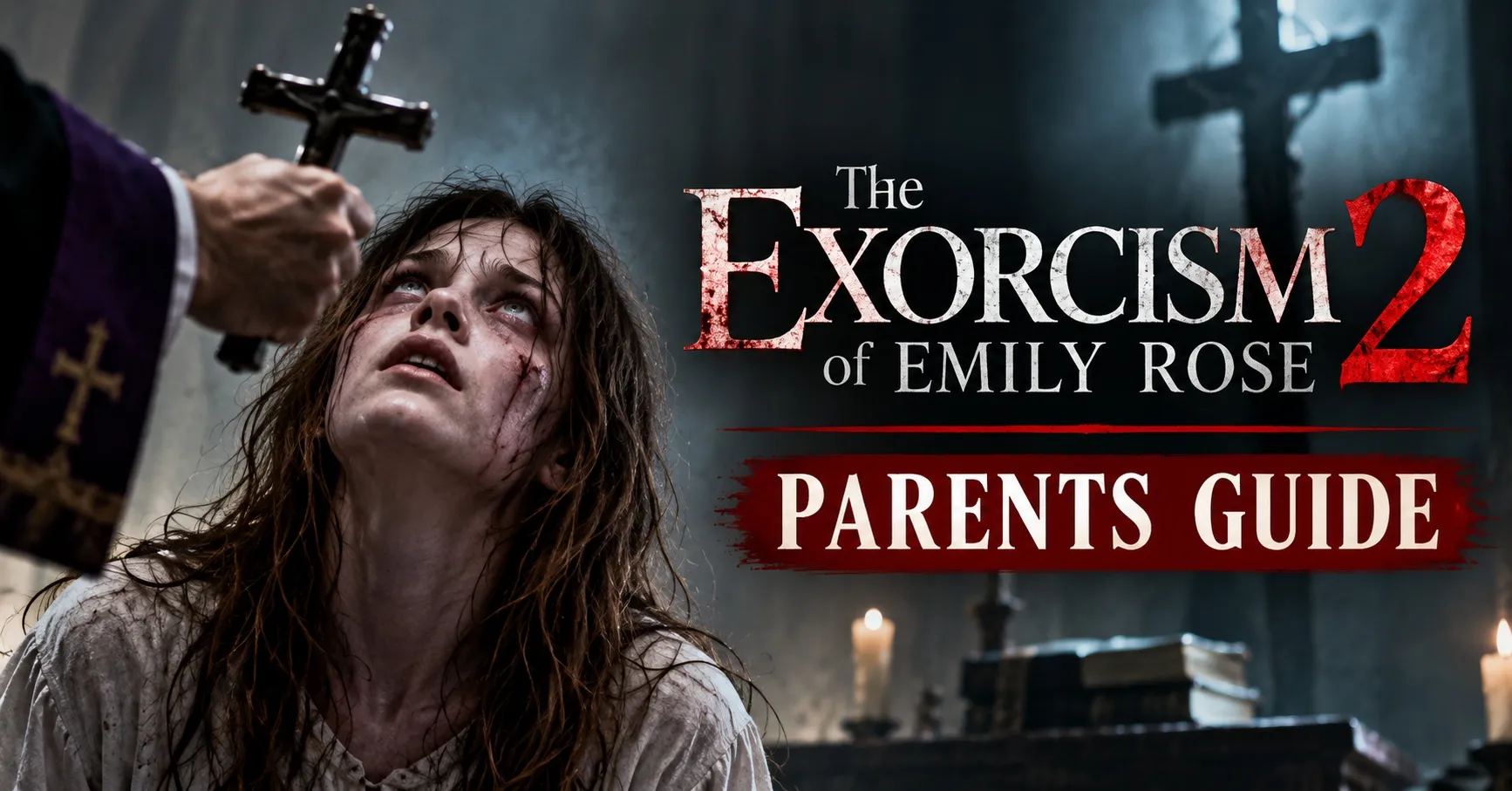
Official MPAA Rating and Recommendation (PG-13)
The Motion Picture Association officially assigned The Exorcism of Emily Rose (2005) a PG-13 rating due to its intense thematic material, frightening sequences, and disturbing images. Review organizations and family advisory guides generally recommend this supernatural courtroom-horror drama for mature viewers aged 15 and older.
The official PG-13 classification signals that while explicit violence, gore, and sexual nudity are entirely absent, the atmospheric psychological terror demands significant viewer maturity.
Parents should look beyond standard rating labels to understand how dark demonic themes and legal arguments impact younger adolescents.
Quick Parental Safety Scorecard (At-a-Glance Metrics)
Assessing the parental safety scorecard reveals a distinct divide between physical content metrics and psychological intensity. While traditional adult content and physical violence remain extremely low, the movie’s frightening sequences and demonic imagery score high on the psychological disturbance scale.
Sexuality and Nudity: Zero. There are no explicit romantic scenes, partial nudity, or sexual situations throughout the runtime.
Profanity and Language: Mild. Coarse language is minimal, restricted to rare expletives rather than continuous verbal vulgarity.
Frightening and Intense Sequences: Severe. Unnatural body contortions, demonic faces, and terrifying nocturnal hauntings create persistent dread and suspense.
Why This PG-13 Movie Requires Caution for Younger Teens
Younger teens and middle-schoolers often mistake a PG-13 rating for light entertainment, making careful evaluation essential before family viewing. The intense courtroom debates paired with harrowing supernatural flashbacks can easily overwhelm viewers under the age of 15.
The film uniquely combines clinical legal skepticism with authentic-feeling demonic episodes, creating an intellectually and emotionally heavy experience.
Adolescents who are sensitive to dark spiritual themes, psychological trauma, or religious horror may experience lingering anxiety after watching the sequences.
Plot Overview & True Story Context
What Is The Exorcism of Emily Rose About? (Plot Summary)
Directed by Scott Derrickson, The Exorcism of Emily Rose follows a gripping dual narrative that intertwines a dramatic courtroom trial with terrifying supernatural events. The story centers on a prosecutor and a defense attorney debating whether a Catholic priest was criminally negligent during a fatal religious rite.
The narrative unfolds primarily through courtroom flashbacks during the trial of Father Richard Moore, portrayed by Tom Wilkinson, who performed an unauthorized exorcism on college student Emily Rose, brought to life by Jennifer Carpenter. As defense lawyer Erin Bruner, played by Laura Linney, builds her legal strategy, the film reconstructs Emily’s harrowing final weeks at college and home.
The Prosecution’s Argument: Claims that Emily suffered from severe, untreated medical conditions, specifically epileptic seizures and psychosis, and that the priest’s abandonment of medical care led to her death.
The Defense’s Argument: Contends that conventional medical science failed because Emily was genuinely afflicted by malevolent supernatural forces requiring spiritual intervention.
Based on a True Story: The Anneliese Michel Case and Legal Drama
The film draws its chilling premise directly from the real-world Anneliese Michel case in Germany, giving the cinematic narrative profound gravity and intellectual weight. This historical foundation elevates the movie far beyond standard horror tropes into an intense, thought-provoking examination of human suffering.
In the real-life historical event, a young German woman underwent months of rigorous religious rites after exhibiting unexplainable physical and spiritual afflictions, ultimately resulting in a landmark trial for the clergy involved. Director Scott Derrickson translates this complex intersection into a compelling legal framework where modern skepticism clashes with profound spiritual belief.
Faith Versus Science: The core conflict forces characters and viewers alike to question the boundaries where medical science ends and spiritual reality begins.
Legal Proceedings: Rather than relying solely on atmospheric jump scares, the movie anchors its narrative tension within expert medical testimony, witness depositions, and courtroom cross-examinations.
Violence, Body Contortions, and Disturbing Imagery
Unnatural Body Contortions and Physical Spasms
Unnatural body contortions and severe physical spasms form the primary source of physical intensity in the film, replacing traditional gore with deeply unsettling bodily horror. Jennifer Carpenter’s visceral performance portrays agonizing physical twists that look impossible for a human frame, triggering intense unease for unprepared viewers.
Throughout possession episodes, Emily suffers from violent muscle rigidity, sudden arching of the spine, and painful self-inflicted injuries.
These physical manifestations are depicted with high realism, highlighting the toll of the affliction without relying on explicit blood or physical weaponry.
Physical violence is strictly limited to self-harm and erratic bodily spasms resulting from the spiritual struggle.
Parents should note that these skeletal contortions can be visually jarring and frightening for younger adolescents.
Severe Frightening Sequences and the 3:00 AM Haunting
Severe frightening sequences are anchored by the recurring 3:00 AM haunting motif, during which Emily experiences terrifying nocturnal paralysis and demonic visitations. This specific temporal fixation creates an enduring sense of dread, leading characters to wake up to supernatural phenomena precisely during the demonic hour.
The atmosphere shifts rapidly from academic courtroom debates to chilling psychological terror during these midnight flashbacks.
Sound design and sudden visual jumps amplify the horror, ensuring that the tension remains high long after the scenes end.
The 3:00 AM phenomenon acts as a primary psychological trigger throughout the narrative.
Nightmarish visions and oppressive auditory hallucinations heighten the overall intensity level for sensitive viewers.
Disturbing Visuals: Insect Eating, Cat Attacks, and Postmortem Photos
Disturbing visuals such as eating insects, sudden animal attacks, and graphic courtroom evidence photos push the PG-13 envelope into deeply unsettling territory. These specific sensory shocks are designed to disturb the audience psychologically rather than rely on traditional horror movie gore or slasher tropes.
During acute episodes, Emily exhibits bizarre behaviors, including consuming insects and enduring grotesque sensory hallucinations.
A shocking scene involving a cat attacking a face adds an aggressive element of sudden animal terror during a critical sequence.
A postmortem photograph presented during the courtroom trial provides a chilling visual reminder of Emily’s physical deterioration.
Demonic faces flash across the screen unexpectedly, creating startling jump-scare moments that linger in memory.
Language, Profanity, and Substance Use
Mild Profanity and Coarse Language Instances
Profanity and coarse language in The Exorcism of Emily Rose are remarkably mild and infrequent, proving that verbal vulgarity is entirely absent from the movie’s core risk factors. Parents worried about excessive swearing will find that conversational language remains restrained and subordinate to the heavy psychological horror.
Coarse language is limited to minimal instances, including a single use of stronger expletives like sh*t alongside occasional mentions of damn, hell, and son of a bitch.
Conversational exchanges between attorneys, clergy members, and university staff maintain a formal, professional tone appropriate for a courtroom drama.
Profanity frequency is extremely low compared to standard contemporary horror or legal thrillers.
Language consists primarily of legal jargon, academic discussions, and theological debates rather than offensive street slang.
Casual Alcohol and Substance Consumption
Casual alcohol and substance consumption appear strictly as minor background elements during social interactions, office settings, and legal meetings. These brief depictions are completely non-glorified and do not contribute to any reckless behavior or substance abuse plotlines within the narrative.
Characters are occasionally seen enjoying martinis in upscale bars or having casual drinks in office settings after demanding courtroom hours.
Substance use is entirely incidental, serving merely to ground adult characters in realistic professional environments.
Alcohol consumption is limited to standard adult social drinking without excessive or graphic indulgence.
Drug use or illegal substances play zero role in the character arcs or storyline progression.
Sex, Nudity, and Romance Breakdown
Complete Absence of Sex and Nudity
Parents evaluating family-friendly content can rest assured that The Exorcism of Emily Rose features a complete absence of sex and nudity, maintaining a strictly non-sexualized environment throughout its runtime. There are no explicit sex scenes, partial nudity, or suggestive wardrobe choices to navigate during family movie nights.
Physical intimacy is completely left out of the narrative focus, making the film entirely free from traditional romance-genre distractions or suggestive encounters.
Characters dress in standard academic, professional, and courtroom attire without any revealing clothing or sexualized framing in any scene.
Focus on Legal Ethics and Supernatural Mystery Over Romance
The narrative deliberately sidelines romantic subplots in favor of an intense legal and supernatural mystery, exploring personal ethics, faith, and scientific skepticism instead of dating drama. Relationships between key characters remain strictly professional or familial as they face the unprecedented courtroom challenge.
Interactions between defense attorney Erin Bruner and her legal colleagues remain strictly professional, driven exclusively by the intense pressure of the trial.
Depictions of Emily’s university life focus on academic stress, burgeoning faith, and roommate interactions rather than romantic entanglements or relationship subplots.
Video Review and Visual Preview
Watch The Exorcism of Emily Rose Parental Guidance Video Review
Watching a comprehensive video review provides parents with an immediate visual preview of the film’s tense atmosphere, courtroom dynamics, and psychological horror elements. Reviewing expert critic analysis helps families evaluate whether the dark spiritual themes and terrifying sequences align with their teenagers’ maturity levels before streaming.
Visual assessments highlight the stark contrast between intellectual courtroom logic and atmospheric horror flashback sequences.
Parental guidance video summaries offer a structured breakdown of why specific body contortions and demonic imagery warrant careful age consideration.
Final Verdict, Age Recommendations & Alternatives
Final Parental Verdict by Age Bracket (Is It OK for 12 or 14-Year-Olds?)
The definitive final verdict establishes that The Exorcism of Emily Rose is best suited for older teens aged 15 and up, while strongly advising against viewing for 12-year-olds or early adolescents due to severe psychological distress, frightening 3:00 AM haunting sequences, and disturbing demonic body contortions.
Evaluating specific age groups helps families prevent unexpected viewing anxiety and ensures appropriate media choices:
Ages 15 and Up (Older Teens): Appropriate for mature teenagers who appreciate intellectual courtroom dramas, legal ethics debates, and atmospheric suspense without graphic physical gore.
Ages 12 to 14 (Early Teens): Not recommended without careful parental supervision, as the intense psychological terror, self-harm depictions, and dark spiritual themes can easily overwhelm younger viewers.
Under 12: Completely unsuitable due to terrifying demonic imagery, sudden auditory jumps, and heavy possession narrative elements.
For community-voted timestamps, alternate version notes, and comprehensive advisory flags, consult the IMDb Parental Guide.
Alternative Legal and Supernatural Thrillers to Watch Instead
Families seeking engaging courtroom dramas or supernatural mysteries without the heavy demonic terror and intense body contortions can explore safer alternative thriller movies. These selections provide compelling legal debates and suspenseful storytelling while maintaining a tamer, more accessible profile for younger audiences.
A Few Good Men (1992): A gripping military courtroom drama driven by stellar performances, ethical debates, and sharp dialogue completely free of supernatural horror.
The Sixth Sense (1999): A classic PG-13 supernatural mystery focused on ghosts and psychological depth rather than violent demonic possession or bodily horror.
Signs (2002): A suspenseful PG-13 alien-invasion thriller that delivers atmospheric tension and family bonding without excessive gore or frightening spiritual themes.


Pingback: Lars And The Real Girl Parents Guide: Age Rating & Review