 Is Five Nights at Freddy’s 2 Safe for Kids?
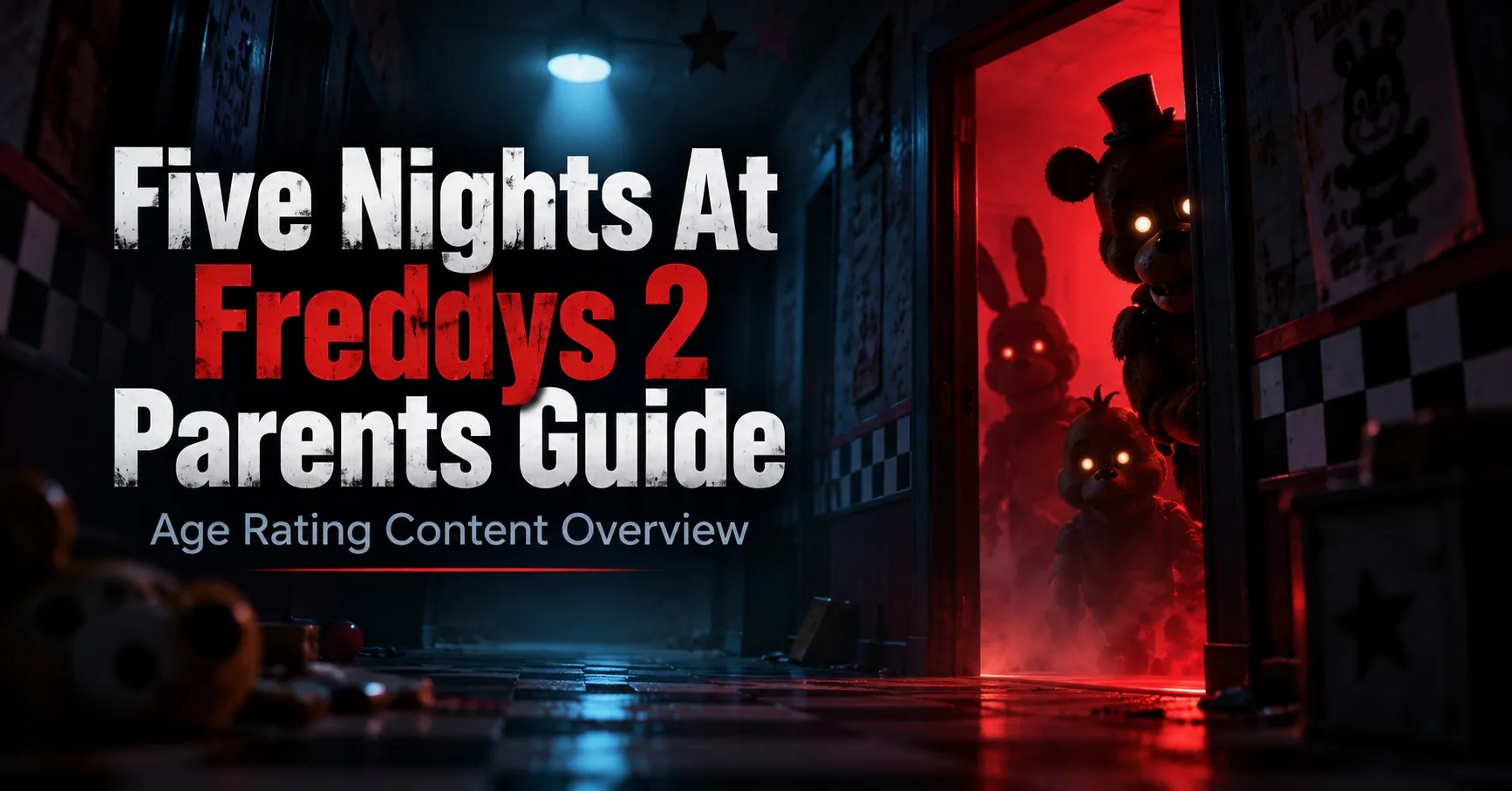
The Five Nights at Freddy’s 2 movie carries an official PG-13 rating for intense sequences of violence, bloody imagery, terror, and some language. Developed by Blumhouse Productions, written by Scott Cawthon, and directed by Emma Tammi, this sequel amplifies the horror elements found in the original adaptation, making it significantly more intense for younger audiences.
Quick Facts: MPAA Rating and Recommended Age Group
The official MPAA rating for the FNAF 2 movie is PG-13, which means parents are strongly cautioned that some material may be inappropriate for children under 13. Although the source video game franchise maintains a massive following among elementary and middle school students, the film adaptation incorporates explicit visual violence, psychological terror, and unsettling monster designs that require mature emotional processing.
Official Rating: PG-13 (Parents Strongly Cautioned)
Primary Content Triggers: Sudden jump scares, robot attacks, bloody imagery, and dark themes of childhood trauma.
Recommended Age Threshold: 13 years and older, evaluated on a case-by-case basis according to individual child maturity.
Deciding Whether Your Child is Ready to Watch
Deciding whether your child can safely watch the FNAF 2 movie depends entirely on their emotional resilience to sudden audio cues, dark atmospheric dread, and realistic threat depictions. Children under the age of 10 are generally not suited for this viewing experience, as the high-stakes suspense and menacing animatronics frequently trigger anxiety or nightmares.
Under 10 Years Old: Strongly discouraged due to explicit jump scares, dark thematic elements, and graphic terror.
Ages 10 to 12: Conditional viewing recommended only if the child has previously handled moderate PG-13 horror films without distress.
Ages 13 and Up: Generally appropriate for teenagers who enjoy spooky video game adaptations and suspenseful thriller narratives.
What Parents Need to Know
Navigating the specific content elements of a horror sequel requires a transparent look at what appears on screen. The Five Nights at Freddy’s 2 movie features a heightened level of suspense, visceral action, and emotional weight compared to its predecessor. Parents evaluating the film need precise clarity on individual content categories before allowing younger viewers into the theater.
Violence & Gore (Robot Attacks, Crushed Skulls, and Blood)
The film contains moderate violence and gore, featuring mechanical robot attacks, bloody imagery, and graphic physical trauma that significantly exceeds standard family-friendly entertainment. While it avoids gratuitous splatter-film excess, the PG-13 rating is heavily earned through intense physical altercations involving animatronic antagonists.
Robot attacks involving sudden ambushes, physical grabbing, and violent yanking.
Graphic depictions including a crushed skull with visible blood spatter.
Severed body parts falling to the ground during chaotic confrontation scenes.
Characters sustaining bloody stab marks and being dragged underwater with visible blood trails.
Fear, Jump Scares, & Psychological Terror
Psychological terror and sudden jump scares form the core of the viewing experience, utilizing a dark, suspenseful atmosphere to keep audiences on edge throughout the runtime. The combination of unexpected audio spikes and eerie character movements creates an environment designed to trigger genuine fear and unease in sensitive viewers.
Heavy reliance on sudden jump-scares that catch viewers completely off guard.
A persistent, dark, and claustrophobic atmospheric tension across scenes.
Elements of demonic or supernatural possession surrounding the central antagonists.
Children placed in active peril while being stalked by relentless, menacing entities.
Language, Profanity, & Dialogue
Profanity within the film remains infrequent and mild-to-moderate, utilizing standard conversational curse words rather than aggressive or explicit dialogue. While language is not a primary concern for the PG-13 rating, parents should expect occasional instances of common vernacular that younger children might repeat.
Infrequent use of mild curse words such as “damn” and “hell”.
Occasional inclusion of harsher terms like “s–t”, “a–hole”, and “jackass” during high-stress confrontations.
Complete absence of sexualized dialogue, slurs, or explicit verbal references.
Adult Themes: Loss, Grief, and Past Trauma
Beyond physical scares, the narrative explores heavy adult themes centered around unresolved grief, personal loss, and the psychological impact of childhood trauma. These story beats drive the character motivations but can sometimes introduce complex emotional messaging that requires parental discussion afterward.
Core plot points driven by the deep desire for family protection and survival.
Central focus on past trauma, mourning, and unresolved mysteries involving missing children.
Dramatic conflicts that may feel emotionally complex or heavy for younger viewers to process independently.
Age-by-Age Readiness Guide and FNAF 1 Comparison
Navigating a child’s media consumption requires clear benchmarks regarding developmental maturity and emotional resilience. This comprehensive age-by-age guide breaks down viewing thresholds and compares the sequel directly to the original installment to help parents make an informed decision.
Under 10 Years Old: Why This Movie Is Not Recommended
Determining whether is five nights at freddys 2 appropriate for 10 year olds requires understanding that children under this age limit face a high risk of severe fright. The film’s intense mechanical violence and relentless jump scares easily overwhelm young minds, making it entirely unsuitable for pre-teens.
Graphic elements like crushed skulls and bloody stab marks can trigger persistent nightmares and acute anxiety.
High frequency of sudden, loud audio-visual shocks terrify younger viewers unexpectedly.
Complex storylines involving missing children create unnecessary emotional distress for young kids.
Ages 10 to 13: Proceed With Caution (Parental Discretion Advised)
For kids falling into this age-by-age guide bracket, parents must exercise strict discretion before granting permission to watch. While many pre-teens enjoy the video game lore, experiencing these horror elements in a dark theater environment amplifies the intensity significantly beyond gaming monitors.
Only permit viewing if the child has comfortably handled PG-13 thrillers and scary media previously.
Discuss the fictional nature of the animatronics beforehand to help reduce viewing anxiety.
Consider streaming the film at home first where lighting and volume remain fully controllable.
Ages 14 and Up: Generally Suitable for Teens
Teenagers aged fourteen and older possess the emotional maturity required to process the film’s PG-13 rating and suspenseful tone. At this stage, viewers appreciate the cinematic craftsmanship, practical effects, and franchise references without experiencing lasting psychological distress.
Older teens typically seek out these exact genre thrills and spooky entertainment values.
Viewers are fully capable of separating fictional robot attacks from real-world safety.
Teens easily comprehend mature narrative themes like unresolved grief and past trauma.
How FNAF 2 Compares to the 2023 Original Movie
Evaluating FNAF 1 vs FNAF 2 reveals a noticeable escalation in visual intensity and horror elements within the sequel. While the first film leaned heavily into atmospheric mystery and restrained suspense, the second installment introduces more explicit violence and aggressive monster choreography.
Increased volume and frequency of sudden jump scares appear throughout the runtime.
Higher concentration of physical combat, blood spatter, and violent robot ambushes.
Expanded animatronic roster featuring more menacing, fast-paced, and threatening designs.
Theater vs. Home Viewing & Actionable Trigger Warnings
Environmental factors during theater viewing significantly magnify shock value and emotional stress compared to home streaming. Watching a horror sequel on a massive cinema screen with immersive surround sound amplifies the intensity of every jump scare, making physical preparation and environment control essential for sensitive viewers.
How Theaters Amplify Fear (Big Screens & Surround Sound)
Theater environments strip away a child’s sense of control by surrounding them with total darkness, giant visuals, and thunderous audio spikes. While home streaming allows parents to pause, lower the volume, or turn on room lights, a public theater experience locks viewers into relentless sensory tension.
Surround Sound Impact: Booming bass and sudden audio cues trigger an involuntary startle reflex much faster than standard home television speakers.
Immersive Scale: Larger-than-life animatronic attacks on a cinema screen make threatening visuals feel overwhelmingly close and inescapable.
Home Streaming Control: Viewing the film on a living room setup provides a safe, controllable environment where younger viewers can easily regulate their exposure.
Key Scene Triggers: When to Cover Your Child’s Eyes
Anticipating specific visual trigger warnings allows parents to intervene during the movie’s most intense sequences. Recognizing the buildup to high-stress moments ensures that sensitive pre-teens avoid graphic imagery without having to leave the theater entirely.
Sudden Mechanical Ambushes: Watch for quiet hallway scenes accompanied by dropping audio frequencies, which consistently precede rapid robot jumpscares.
Graphic Physical Trauma Sequences: Anticipate confrontation scenes involving exposed wiring and bloody prop effects during the climax.
Confined Space Chases: Pay attention when characters enter pitch-black backrooms or ventilation shafts where stalking predators strike without warning.
Official Trailer Overview: http://www.youtube.com/watch?v=dSDpoobO6yM
What to Watch Instead: Safe Alternatives & Final Verdict
Finding age-appropriate entertainment that captures the excitement of gaming culture without explicit gore or intense terror helps younger kids participate in trends safely. Exploring moderated alternative media and applying a structured decision checklist ensures families choose movies that match their children’s emotional maturity.
Mild Horror & Gaming Alternatives for Younger Kids
Younger children who love video game adaptations but cannot handle PG-13 terror can safely enjoy lighter animated features that offer spooky fun without graphic violence. Trusted authority platforms like Common Sense Media and Kids-In-Mind provide detailed content metrics to help parents vet these alternative choices effectively.
The Super Mario Bros. Movie: Delivers vibrant video game world-building and lighthearted action completely free of horror or blood.
Monster House: Offers mild, animated spooky thrills and supernatural mystery designed specifically for pre-teen audiences.
Hotel Transylvania: Features classic movie monsters in a humorous, family-friendly comedy format without terrifying jump scares.
Final Parent Decision Checklist
Making a final choice on whether to stream or attend a theatrical screening requires evaluating your child’s specific emotional boundaries, past media reactions, and comfort with suspense. Before committing to tickets, review comprehensive safety breakdowns like the IMDb Parental Guide to cross-reference specific scene triggers and parental advisory notes.
Has your child successfully watched PG-13 thriller films in the past without experiencing sleep disruption or anxiety?
Are you prepared to manage environmental factors by choosing home streaming over immersive theater screenings?
Does your child understand that the film’s animatronic threats are purely fictional characters within a scripted narrative?

